In the 1958 film, Auntie Mame, the titular character famously says, “Life is a banquet, and most poor suckers are starving to death!" The film, based on a book that also became a stage play and a musical, is about the flamboyant, unconventional and absolutely fabulous guardian of her orphaned nephew. She teaches him to embrace joy, challenge societal norms, and say “yes” to life’s adventures.

“To us, Lyn was Auntie Mame,” says Benaron Gleiberman, Lyn Goldman’s nephew. “It was one of her favourite acting roles when she was involved in Regina Little Theatre, and it was a good reflection of her life and activities,”

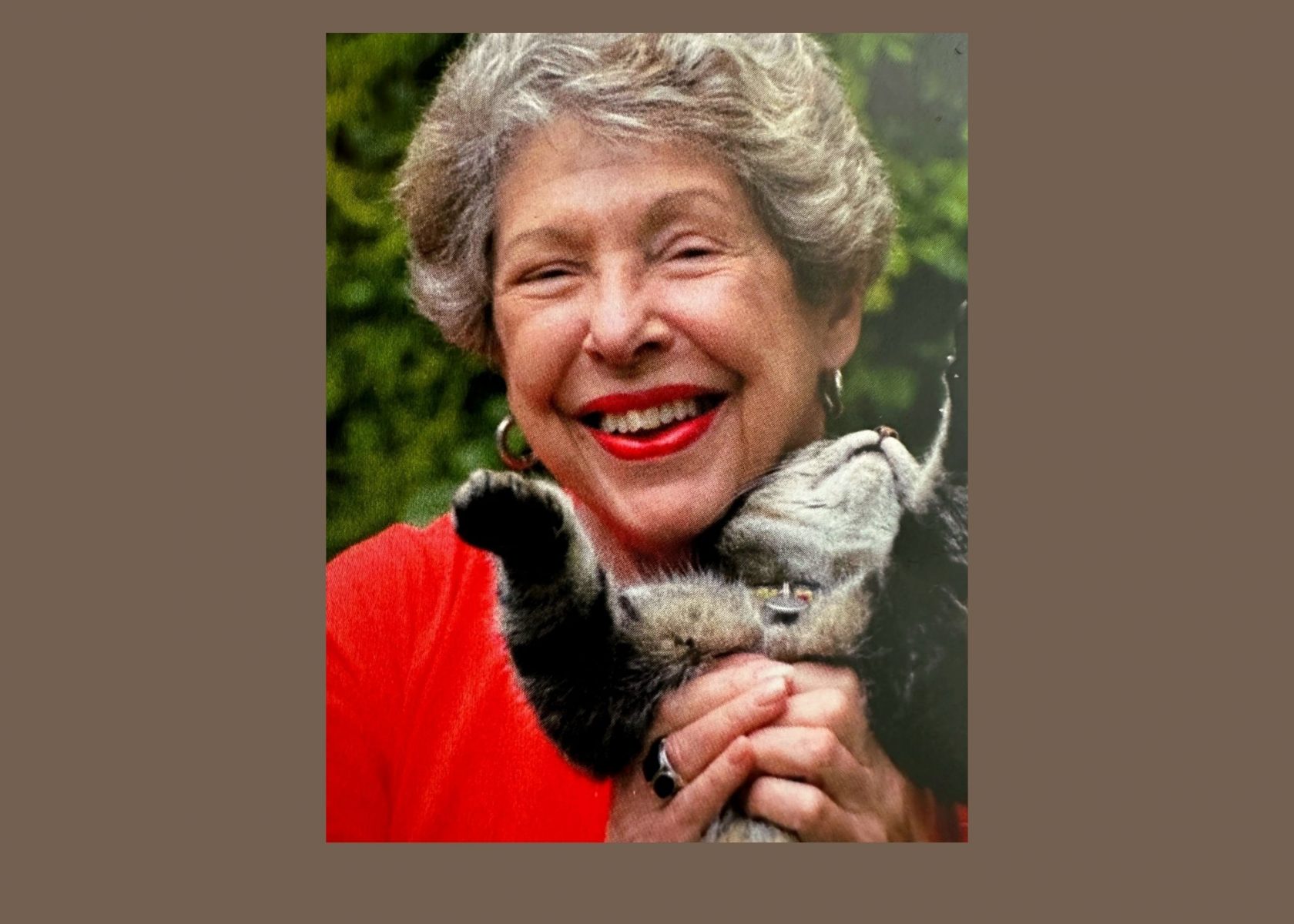
Lyn Goldman (1932 – 2026) spent her life ensuring that people in Regina have opportunities to enjoy a banquet of creativity in their community; the impact of her efforts will continue to resonate for generations after her passing. For example, just days before her death on January 13, she launched the $50,000 Thorn Prize in honour of her late brother Anthony. The prize will be awarded biennially to support a mid-career artist in Canada through a “self-directed period of exploration”, including travel and living expenses, culminating in a solo exhibition at the MacKenzie Art Gallery in Regina.

“Lyn was a remarkable force in our community…. Her contributions to Saskatchewan and Canada’s cultural landscape are immeasurable,” says John G. Hampton, executive director and CEO of the MacKenzie Art Gallery. “One of her final acts was one of service to her community, art, and artists; of celebration and elevation; something genuinely useful. Lyn spent her life in service to her community, always supporting where she could and challenging us all to do our best and not settle for mediocrity.”

Establishing the award was only the last of a multitude of gifts Lyn gave to the community. She was one of the first donors to the College Avenue Campus renewal campaign, which revitalized the U of R’s original College Avenue campus along with Darke Hall, breathing new life into the historic venue to the ongoing delight of Regina audiences. Lyn was a frequent patron of Darke Hall events—not even minus40 degree weather could hold her back from attending a show.

"Lyn was a champion and friend to the University. Her passion for education, culture, and the arts spanned decades,” says Marc Butikofer, the U of R’s Executive Director of University Advancement. “From her leadership on the restoration of the College Avenue Campus Building and Darke Hall to her work to plan the School of Journalism & Communications, her impact was transformational. As an alum, she was an active member of our community and a constant presence at university events, lectures, meetings and activities. Her passion for life-long education through the Senior's University Group was never far from any conversation with Lyn. Like many, I will miss her in many ways."

The arts aren’t the only area where Lyn left an indelible mark. In a 2019 interview, Lyn said, “A city without a theatre and a college is a backwater.” Lyn was a tireless supporter of higher education, dedicating much of her career to the University of Regina—as a student, professor, public relations specialist, administrator, and lifelong learner. She received her BA (Honours) in 1972, and an MA in 1980. For her many accomplishments and contributions, in 2015 she was awarded a Doctor of Laws honoris causa from the University of Regina at the age of 83. One of her accomplishments was helping to found the University’s School of Journalism. After 20 years in a variety of roles, she retired as head of certificate programs for continuing education. Her association with the U of R didn’t end there, though: she took classes from the Lifelong Learning Centre for decades after retirement. In an interview with Degrees magazine in 2013, she said, “Just because you retire doesn’t mean that you want to give up thinking. The way that you engage your mind every day is in conversation, in reading and in learning,”

Lyn was also an advocate for women, a trailblazer who smashed glass ceilings in broadcasting in Regina, Toronto, and Los Angeles. It wasn’t easy to be a woman working in journalism in the 1950s — gender discrimination was rampant. In response, Lyn co-founded the Regina Women's Network, which continues today, giving professionals opportunities to connect, network and support each another.

She also gave of her time to the community as a board member of the Saskatchewan Arts Board and Saskatchewan Foundation for the Arts and as a lifetime member of the Canadian Public Relations Society, ACTRA, the U of R Lifelong Learning Centre, Saskatchewan Writers’ Guild, and Regina Little Theatre, where she performed for more than 60 years. Lyn was also president of the Association of Canadian Clubs, both in Regina and nationally.

In recognition for her longstanding commitment to culture, the performing arts and higher education, Lyn received the Queen's Golden Jubilee medal, the Queen's Diamond Jubilee medal and the Saskatchewan Order of Merit (2019).

Her nephew wants people to remember Lyn as someone who truly loved Regina and the people who live there. “She appreciated her roots in Regina and wanted to make it the best place she possibly could. She wanted a place where people could walk into Darke Hall and smile and listen to the music. Where they could walk into Regina Little Theatre and smile and see the work done by volunteers. Where they could walk into the Conexus Arts Centre and revel in the acoustics of a place with world-class sound,” says Gleiberman. “She really wanted to make a place that everybody could come and enjoy the arts and cultural experience. I think it made for a big part of the identity of the community and the city as a whole.”


Lyn Goldman understood that life is, indeed, a banquet. But she didn't feast at the table herself; she spent her entire life setting it for others—at Darke Hall, the MacKenzie Art Gallery, Regina Little Theatre, the University of Regina and beyond. Her banquet will continue to nourish the community for generations to come.

About the Author

Sabrina Cataldo is an award-winning writer and communicator who lives in Regina. She had the pleasure of crossing paths with Lyn Goldman through a variety of organizations, including the Canadian Public Relations Society, Regina Little Theatre, and Saskatchewan Arts Board.

WP_Post Object ( [ID] => 9918 [post_author] => 20 [post_date] => 2026-02-18 11:56:36 [post_date_gmt] => 2026-02-18 17:56:36 [post_content] =>

Q: As a columnist for The Vancouver Sun, you wrote extensively about women's and children's rights. What drew you to this topic?

I had an extraordinary editor. He told me I could write anything I wanted and all he expected from me were interesting stories. At the time, the Sun had quite a few columnists and I had to find a niche for myself, so I went looking for interesting stories that nobody else was covering - things like prostitution and human trafficking. It turned out that what appealed to me most were stories about the powerless whose voices weren't getting in the paper.

Q: Can you tell us about some of your volunteer activities?

I am a volunteer for Women Leaders of Tomorrow and a long-time donor to the U of R. During a conversation in May 2025 with Marc Butikofer, Executive Director, University Advancement, I asked if the U of R would do something for Afghan women. I'd had a conversation with Friba Rezayee, Women Leaders of Tomorrow's founder, who told me about how the American University of Afghanistan in Qatar was being shut because the U.S. government had cut off funding. At that time, there were 150 students under threat of having no other choice but to go back to Afghanistan. Afghanistan is the only country in the world that forbids women from going to school beyond Grade 6. Immediately, Marc said "I think we can help. We have a scholarship for students from conflict areas - Project Resilience." A few weeks later, he got back to me and said that Project Resilience didn't have the funds available to support many of the students. He asked whether I would be willing to use my contacts to help the University of Regina raise funds to cover the students' tuition and living expenses.

I'm a journalist. I had no idea how to raise money, but I did know who to contact for help. I started with my friend, Anne Giardini - the former chancellor of Simon Fraser University. "It's easy," she said. "Write an email to 100 people and ask them for $1,000 each. I'll help."

So, with the help of two other friends we started fundraising, sending emails to friends, family and contacts, telling the story of these students - six of whom are now studying at the U of R. The fundraising was slow, but it picked up speed.  After some media coverage brought attention to these students, their situation and what's happening in Taliban-ruled Afghanistan, money started to come in.

Q: Why do you think it was important for the University of Regina to partner with Women Leaders of Tomorrow through Project Resilience?

It reflects the values of Saskatchewan and the values of Canada - a belief that it's incumbent upon people who are educated and those who are educating people to share knowledge. We know what happens when people aren't educated. If you don't have an educated population, it's very difficult to have a democracy. Education is one of the keys to a safe and stable society. It allows humans to be fully human - it allows us to question, to be creative, to strive and to change things.

Q: You're co-moderating a panel with Friba and Afghan students at the Inspiring Leadership Forum on March 5. What are you most looking forward to about that?

I haven't met any of the students in person yet, and I'm looking forward to that. I can't wait to hear everything they have to say. They're so inspiring.  What these women have been through in their short lifetimes, most of us wouldn't survive. The fact that they were able to get out of Afghanistan and are now able to dream…. They're so resilient. Their stories need to be told and heard. When I think about Afghan women and girls, it makes me realize every morning how fabulous my life in Canada is compared to the lives of so many other women in the world. That's what the panel is going to be about, reminding people of what a great place and opportunities we have. These women? They inspire me.

[post_title] => Education allows humans to be human [post_excerpt] => [post_status] => publish [comment_status] => open [ping_status] => open [post_password] => [post_name] => daphne-bramham [to_ping] => [pinged] => [post_modified] => 2026-02-19 16:42:21 [post_modified_gmt] => 2026-02-19 22:42:21 [post_content_filtered] => [post_parent] => 0 [guid] => https://www.degreesmagazine.ca/?p=9918 [menu_order] => 0 [post_type] => post [post_mime_type] => [comment_count] => 0 [filter] => raw ) WP_Post Object ( [ID] => 9943 [post_author] => 20 [post_date] => 2026-02-18 14:57:20 [post_date_gmt] => 2026-02-18 20:57:20 [post_content] =>

When Terry McKague passed away on the first morning of 2026, the educational community lost not just a dedicated teacher and administrator, but a person who made learning come alive. "Whether in a high school or university classroom, a teachers' convention or perhaps a church sanctuary, Terry was considered a person with something worthwhile to say and a way to make it sound interesting," his obituary noted-a fitting tribute to someone who spent his career in service of education.

"Terry was passionate about public education, at all levels," said Jim Tompkins LLD'25. "As Chancellor, he helped to guide the University through a difficult financial period. His insight and dedication will be missed."

Born in 1939 to parents who valued education-they'd both been teachers-Terry's path seemed almost predetermined. Growing up in Regina and attending Wetmore School and Central Collegiate, he developed not only academic skills but also talents in music and drama through the Conservatory of Music, Regina Children's Theatre and the Golden Jubilee Choir, talents that no doubt brought a spark to his teaching style later on.

While at university in Saskatoon, Terry met his future wife, Sheila Ledingham, at church. They married in 1963 at Knox United Church, beginning a 62-year partnership. Terry's graduate program took them to Edmonton, where their son Michael was born, and then to Saskatoon, where daughter Meredith was born.

After three years of teaching at the university level, Terry joined the staff of the Saskatchewan Teachers' Federation, where he spent the remainder of his professional career. His transfer to Regina in 1973 proved to be "the last move in a rewarding professional journey filled with satisfying experiences and worthwhile pursuits." While Terry occasionally joked about the endless strategic planning sessions "in blue-smoke-filled boardrooms, while drinking coffee from Styrofoam cups," his commitment to improving education in Saskatchewan never wavered.

One of Terry's most significant contributions came when he was seconded to the Saskatchewan Department of Education to coordinate the curriculum review for the Directions Report (1984). This once-in-a-lifetime opportunity allowed him to directly influence K - 12 education reform across the province, shaping the learning experiences of Saskatchewan students for years to come.

In 1989, Terry became Chancellor of the University of Regina, a major career highlight. Though still employed full-time at the Saskatchewan Teachers' Federation, he devoted all his leisure hours to his role at the University, finding the experience deeply rewarding. After his six-year term, Terry recounted his time as Chancellor by authoring the book, The University in the Nineties, which showed his commitment to understanding and learning from institutional history.

Terry's passion for education extended far beyond Saskatchewan's borders. His travels took him to five continents, but it was his work with educators in Africa, Taiwan and the Caribbean that held the deepest meaning for him. A sabbatical provided the opportunity to pursue a post-doctoral program at UCLA while the family lived in Santa Monica.

Beyond his career, Terry served his community through leadership in numerous organizations, including the Saskatchewan History and Folklore Society, Canadian Club, the Provincial Honours Advisory Committee, and Superannuated Teachers of Saskatchewan. He also supported literacy organizations and the local arts community, recognizing that education extended well beyond classroom walls.

The church remained an important part of Terry's life, from his infant days at Carmichael Church to his funeral at Harmony United Church 86 years later. His service at all levels of ministry in the United Church of Canada reflected his understanding that teaching and learning happen in many contexts.

In his final years, Terry found joy sitting by the fire in his condo, reading over trip diaries from his travels with Sheila, reliving the adventures and learning experiences they'd shared. He delighted in his family's achievements, particularly proud that his children had embraced values their parents exemplified and that his grandchildren excelled both academically and athletically.

Terry believed deeply in the value of education and gained great satisfaction from service. He was keenly interested in those he met and always ready with a witty anecdote to share. These qualities made him not just an effective administrator but a beloved figure in Saskatchewan's educational landscape.

For someone born and raised in simple surroundings, Terry McKague lived a remarkable life. He made the most of his abilities and embraced all that came his way-whether it was a strategic planning session, a curriculum review or the chancellorship of a university.

Terry's passing in "the pre-dawn darkness" (a quote from one of his past Christmas letters) of the new year marks the close of an exceptional educational journey. But his influence lives on in the students whose experiences were shaped by his curriculum work, the institutional changes he helped guide and the countless individuals who encountered his gift for making learning interesting.

Terry McKague's greatest lesson to us may simply be this: education, pursued with passion and purpose, can transform not just individual lives but entire communities.

[post_title] => In Memoriam: Terence McKague [post_excerpt] => [post_status] => publish [comment_status] => open [ping_status] => open [post_password] => [post_name] => in-memoriam-terry-mckague [to_ping] => [pinged] => [post_modified] => 2026-02-19 16:46:20 [post_modified_gmt] => 2026-02-19 22:46:20 [post_content_filtered] => [post_parent] => 0 [guid] => https://www.degreesmagazine.ca/?p=9943 [menu_order] => 0 [post_type] => post [post_mime_type] => [comment_count] => 0 [filter] => raw )