WP_Post Object
(
[ID] => 10003
[post_author] => 20
[post_date] => 2026-04-15 15:26:44
[post_date_gmt] => 2026-04-15 21:26:44
[post_content] =>
For Brittany Hudak BSW'19, the road to the Paralympic podium didn't begin on a groomed ski trail. It began in an aisle of a Canadian Tire in Prince Albert, Saskatchewan, where a chance encounter with Paralympian Colette Bourgonje, a U of R honorary degree recipient, changed everything. Hudak had just finished high school and was working part time at the store, when the 10-time Paralympian and Para nordic skier approached her.
"She wheeled up to me one day when I was working, and asked me if I had ever heard of the Paralympics," Hudak recalls.
Now one of Canada's most accomplished Para nordic athletes Hudak recently competed in her fourth Paralympic Winter Games - the Milano Cortina 2026 Paralympic Winter Games - earning a bronze medal in the 10 kilometer Para Cross-Country event. The experience, she says, felt different - lighter, more joyful, and more fully lived.
"I loved my experience at the Milano Cortina 2026 Games," Hudak says. "The 2022 Beijing Paralympic Games was very different because there were no spectators due to COVID, so there wasn't the same energy while competing. I really appreciated the vibrant atmosphere this time, with people excited to watch."
That energy, combined with the confidence of experience, allowed Hudak to approach competition with a steadier mindset. "I also relieved myself of pressure to perform this time around in comparison to the last, which made the whole experience have a lighter tone," she says. "I enjoyed walking around outside the village and relishing in the entire environment. Italy is an amazing country, and I wanted to enjoy that aspect of the Games."
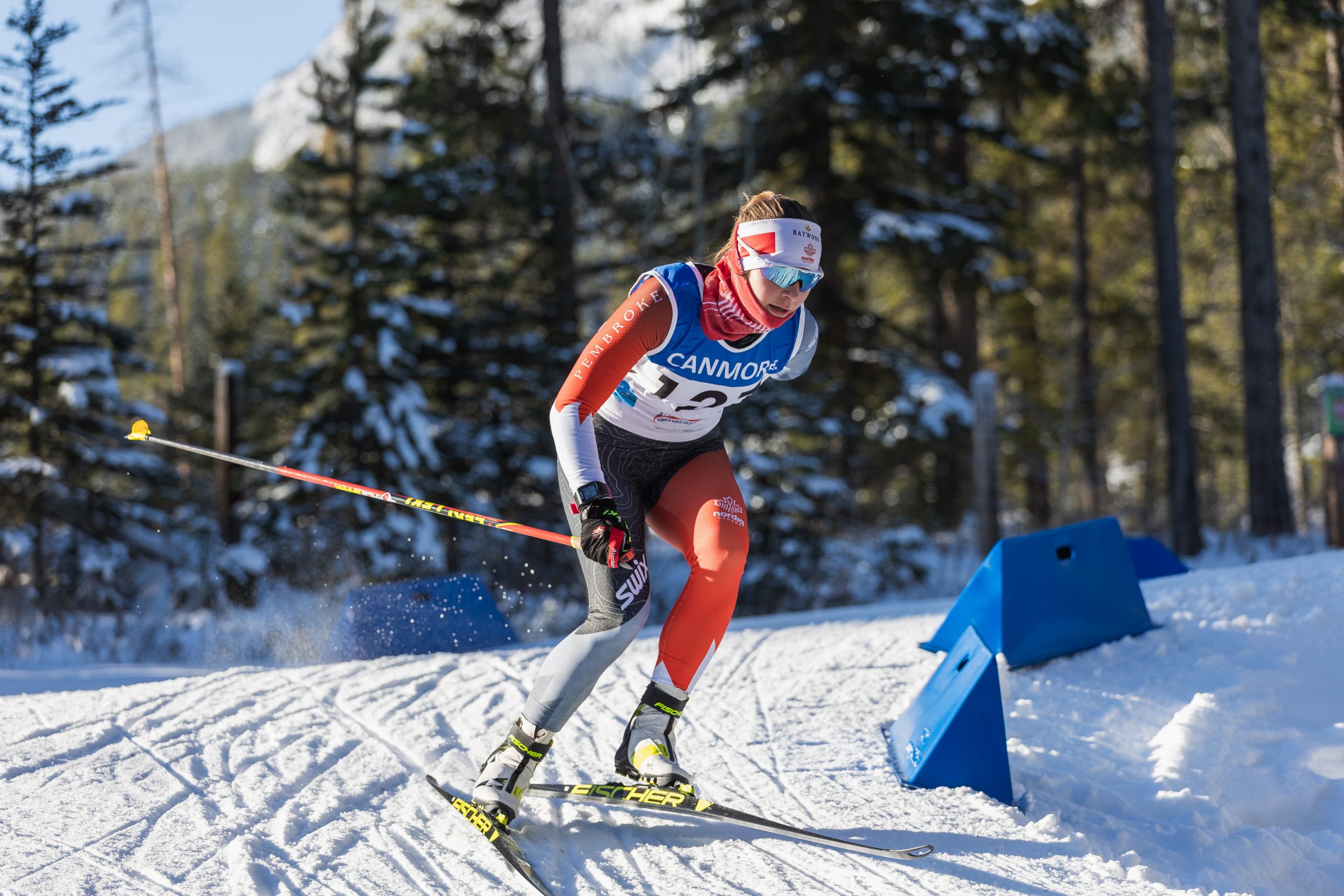
One of Canada's most accomplished Para nordic athletes, Brittany Hudak recently competed in her fourth Paralympic Winter Games - the Milano Cortina 2026 Paralympic Winter Games - earning a bronze medal in the 10 kilometer Para Cross-Country event. Photo courtesy of Brittany Hudak
That balance, between elite performance and perspective, has become one of Hudak's defining strengths. Having first competed at the Sochi 2014 Paralympic Winter Games, she has grown into both a leader and a consistent podium threat, capturing bronze medals at Pyeongchang 2018, Beijing 2022, and most recently in Milan.
"I was very pleased to win bronze in the 10k classic race," she says. "Managing a knee injury for 21 months leading into the Games created some doubt about whether I could reach the podium again. Having been on the podium before at Paralympics gave me the confidence that I could achieve those results, but when the moment happens it's the most incredible feeling."
That moment, crossing the finish line and realizing she had done it again, stands as her most vivid memory of the Games.
"Crossing the finish line and realizing I had placed third, with my team cheering for me, was incredibly special," Hudak says. "Being able to share that moment with my boyfriend right after made it even more meaningful. I walked over to see him after the race, and we embraced for a hug with tears in our eyes."
If there is a through line in Hudak's career, it is resilience, not only physical, but mental and emotional. It is a quality shaped as much in U of R classrooms as on snow-covered trails.
"During my time at the University of Regina, I developed strong time management skills," says the graduate of the Faculty of Social Work, and past Outstanding Young Alumni award recipient. "I pursued my degree while competing internationally, which required a high level of discipline and self-motivation."
Hudak completed more than half her degree through distance education, juggling training camps, competitions, and coursework across time zones. "I completed over half of my degree online, something I was very grateful for, as it allowed me to balance sport and academics," she says. "While some of these qualities come naturally to me, they were greatly strengthened through my experience with distance education."
That discipline has paid dividends on the world stage, where the margins between medalling and finishing in the middle of the pack are razor thin. It has also helped her manage the unique pressures of the Paralympic spotlight.
"Having competed at four Games gave me the advantage of knowing what to expect and how to manage my energy," she says. "Now there are more media requests and a busier environment overall, so I relied on my past experience to navigate it and stay focused on performance. The Games are incredibly exciting, especially your first, but having been through it before helped me feel more comfortable handling distractions."
As for what comes next, Hudak isn't quite ready to close the cover on her athletic story.
"It's hard to say at this point whether I'll commit to another Games," she says. "You dedicate so much to compete at this level, but I know I'm not ready to be done yet. I love high-performance sport and I plan to compete for another year and see where that takes me. Stay tuned."
For an athlete whose journey began with a simple question - "Have you ever considered skiing?"
The answer, it seems, is still unfolding.
[post_title] => Hudak’s Pursuit of Paralympic Precision
[post_excerpt] =>
[post_status] => publish
[comment_status] => open
[ping_status] => open
[post_password] =>
[post_name] => hudaks-pursuit-of-paralympic-precision
[to_ping] =>
[pinged] =>
[post_modified] => 2026-09-16 17:03:13
[post_modified_gmt] => 2026-09-16 23:03:13
[post_content_filtered] =>
[post_parent] => 0
[guid] => https://www.degreesmagazine.ca/?p=10003
[menu_order] => 0
[post_type] => post
[post_mime_type] =>
[comment_count] => 0
[filter] => raw
)
WP_Post Object
(
[ID] => 10085
[post_author] => 21
[post_date] => 2026-06-22 14:31:45
[post_date_gmt] => 2026-06-22 20:31:45
[post_content] =>
When Ralph Goodale stepped off the plane in London in April 2021, he knew his tenure as Canada's High Commissioner to the United Kingdom would be challenging. The United Kingdom had officially left the European Union the year prior; the global economy was in the midst of weathering the COVID-19 pandemic; and there was a major evacuation of civilians from Afghanistan, creating international migration challenges-to name just three examples. Then, less than a year into his post, Russia invaded Ukraine, triggering a sudden influx of more than a million applications from Ukrainians seeking approval to relocate to Canada. All that paperwork went through Goodale's Canada House embassy in London. "It's a very busy post-the second largest Canadian diplomatic mission in the world, and the oldest," says Goodale. And, even with the political, economic and social turmoil, an incredibly rewarding one. "Your job is to make sure the bonds, linkages and functionality of the relationships between Canada and the UK are working successfully. So far, it's turned out rather well. The turbulence continues, but the good, solid, working relationship has been an important thing to make sure we always get right. It's something you never take for granted; you always have to keep working on it."
As High Commissioner, Goodale served as the ambassador from Canada to the United Kingdom, managing bilateral relationships between the two countries. These include everything from political and diplomatic issues to commercial trade and investment to cultural events and scientific exchanges. There is also a defense, security and intelligence component to the role. Goodale notes that the level of economic exchange between Canada and the UK is huge-almost $600 billion-and growing, now that Canada is further diversifying its trade and investments beyond North America. "But it's more than dollars and cents. The way we collaborate with one another transcends politics," he says. "There is a huge amount of understanding, knowledge, trust and respect between our two countries. Our instincts are largely the same, based on the fundamentals-freedom, democracy, human rights and dignity, compassion, fairness, due process, the rule of law-that we have promoted and defended together in the world for a very long time."
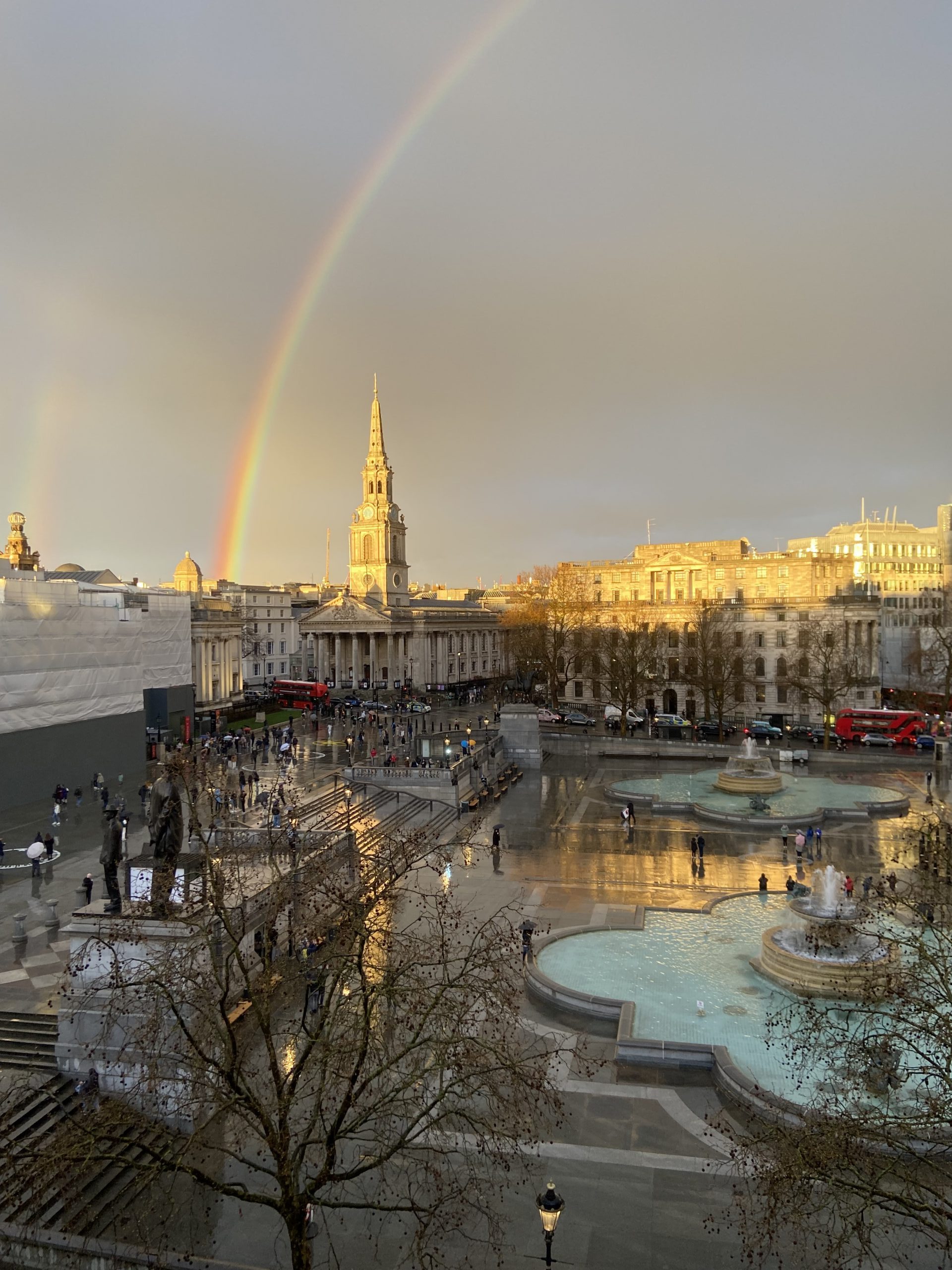
The view from the High Commissioner's office in Canada House, overlooking Trafalgar Square.

Goodale also sat on the Commonwealth Board of Governors with high commissioners from 55 other Commonwealth countries. "These are an important set of potential allies for Canada, though we're not always on the same page as all of them," he explains. For example, the relationship between Canada and India has been tense over the last few years. "It was important during that period of anxiety and disruption for communications to continue to flow. I'm pleased to say that the Indian and Canadian High Commissioners in London had a very good, direct relationship, and we could keep communications flowing despite the legal and diplomatic problems between our nations. Now, the relationship is rejuvenating itself. There's still a lot of work to do. Part of the process of rebuilding is making sure we can have a productive relationship that is also fully respectful of the rule of law. That's absolutely fundamental to our relationship with India and every other country."
Goodale's second year at his post saw an enormous amount of royal activity: Queen Elizabeth II celebrated her Platinum Jubilee in spring 2022; there was a state funeral for her in September; and King Charles III ascended to the throne. While the high commissioner is not directly responsible for royal relations-that falls under the portfolio of the prime minister and governor general-Canada House is situated right around the corner from Buckingham Palace. Goodale says that communications between the diplomatic and royal offices paid off in a very significant way for Canada when the King came to open the most recent session of Parliament. "He did so in midst of all the tension around President Trump's comments on the fifty-first state and the establishment of tariffs to weaken our economy," he observes. "The King is a superb diplomat. For him to come personally to open the Canadian Parliament and emphatically celebrate 'The True North Strong and Free'-that was a very important gesture of support from the King of Canada for the independence and sovereignty of the Canadian state."
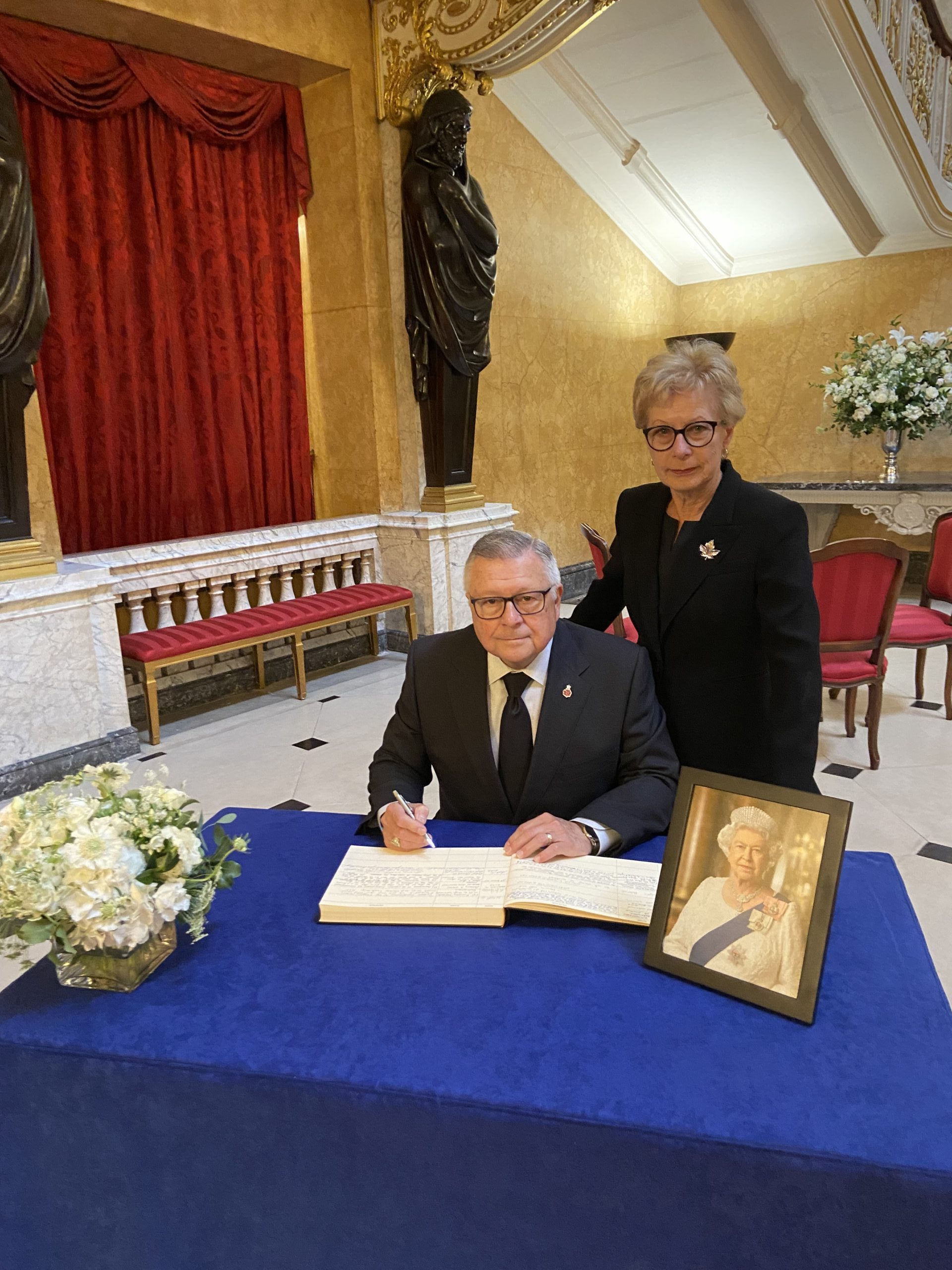
Ralph and Pamela Goodale signing the Book of Condolences for Her Late Majesty, Queen Elizabeth II.
His term as high commissioner came to a close at the end of 2025, after which Goodale and his wife, Pamela, moved back home to Regina. After five months, he was appointed to yet another prominent position, that of a member of the newly formed cross-partisan Advisory Committee on Canada-U.S. Economic Relations. In that role, he and 23 other prominent Canadians serve as key strategic voices advising the prime minister as Canada navigates U.S. trade talks and tariffs. "We've been familiar with a rules-based economic approach between Canada and the U.S. for the past 80 years. Now, all of a sudden, that has changed. The era of greater integration between the Canadian and U.S. economies and the adjudication of disputes according to an agreed set of rules is changing to something else. We don't know yet what that is going to be, and the ground is shifting all the time," he says. "But clearly, the geography has not changed, and we have to have a functional relationship with the U.S. As we build that new relationship, we need to make sure that it doesn't leave us vulnerable, dependent or in a situation where our sovereignty can be questioned."
Goodale says that working through this challenging time is going to take "patience, courage, nimbleness, flexibility and nerves of steel." The advisory committee's objective is to give the government the best possible information on areas of economic opportunity and vulnerability, as well as guidance on improving Canada's leverage and overall bargaining power. "It's not an easy assignment for the committee, but it's even more difficult for the government itself. They actually have to get into those face-to-face negotiations with their American counterparts. The committee is one way Canadians are being asked to provide input into that process. It's a privilege to be able to serve in that way," he says.
The advisory committee has met a few times now, and Goodale is impressed by how the members are all on the same page, despite political, geographical and sectoral differences. "Everyone seems to be pulling in the same direction. There's no scoring of political points-it's all about defending the country. Everyone seems to be really keen on doing the best job that they can in giving the government the most reliable information and the most creative, workable ideas for how we advance Canada's position."
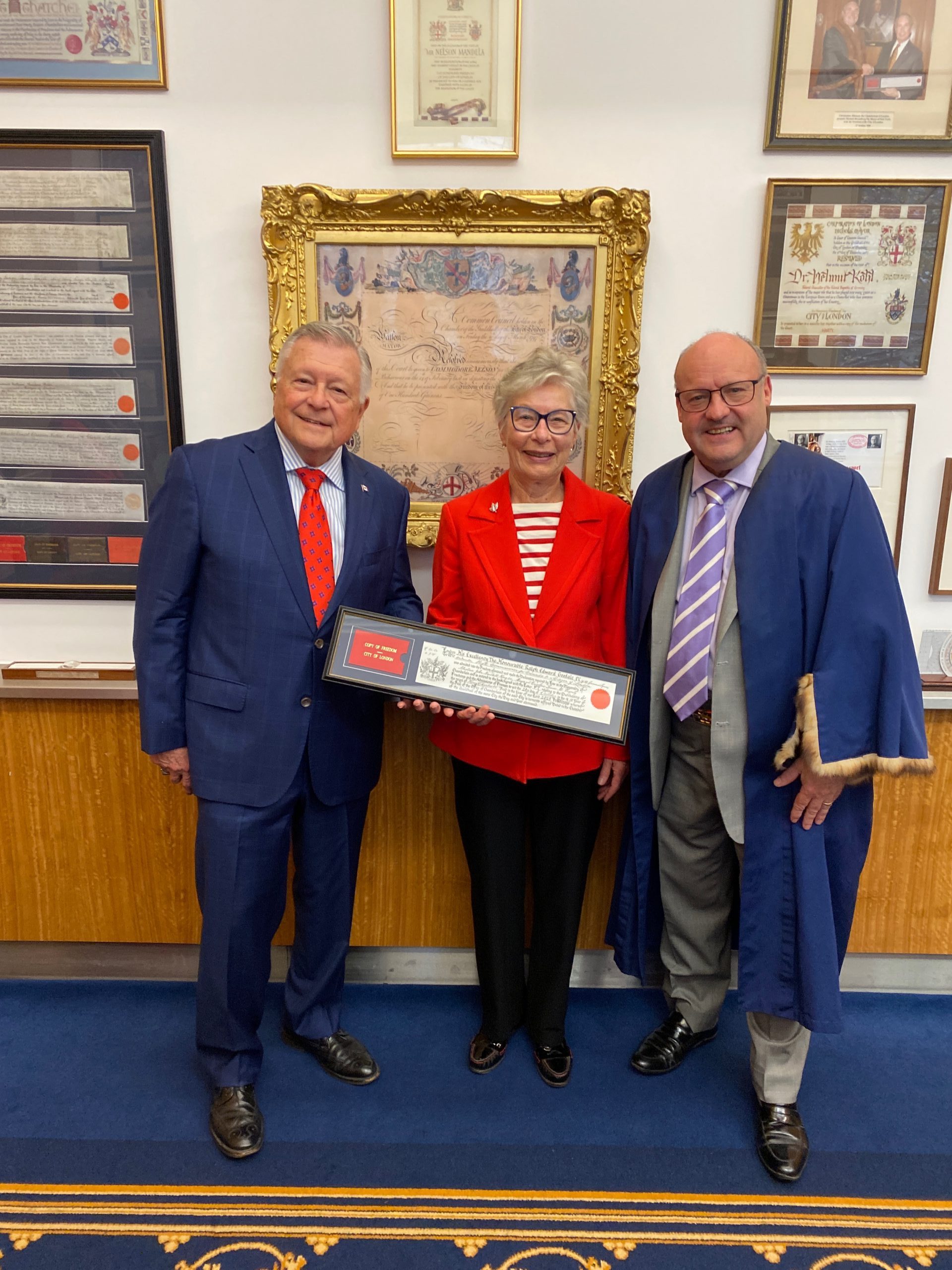
For his contributions to Canada-UK relations, Ralph Goodale has been awarded the "Freedom of the City of London".
In his more than 40 years of public service, Goodale has learned that there are two things that contribute to success in politics, diplomacy and everyday life: "One: Be ambitious. Set your sights as high as you possibly can. Don't start out with only a small goal-make it a large one to accomplish as much as possible," he says. And the second? "Kindness in dealing with people. Whether political friends or adversaries, you can get a lot further and accomplish more of your ambitious agenda if you find ways to work well with people and try to be as kind and respectful as you can of their concerns. In the world of successful politics and diplomacy, you get things done by dreaming big, working hard and treating others with respect."
[post_title] => Ralph Goodale BA'71, LLD'26: A Lifetime of Public Service and Not Slowing Down
[post_excerpt] =>
[post_status] => publish
[comment_status] => open
[ping_status] => open
[post_password] =>
[post_name] => a-lifetime-of-public-service-and-not-slowing-down
[to_ping] =>
[pinged] =>
[post_modified] => 2026-09-16 17:01:23
[post_modified_gmt] => 2026-09-16 23:01:23
[post_content_filtered] =>
[post_parent] => 0
[guid] => https://www.degreesmagazine.ca/?p=10085
[menu_order] => 0
[post_type] => post
[post_mime_type] =>
[comment_count] => 0
[filter] => raw
)