

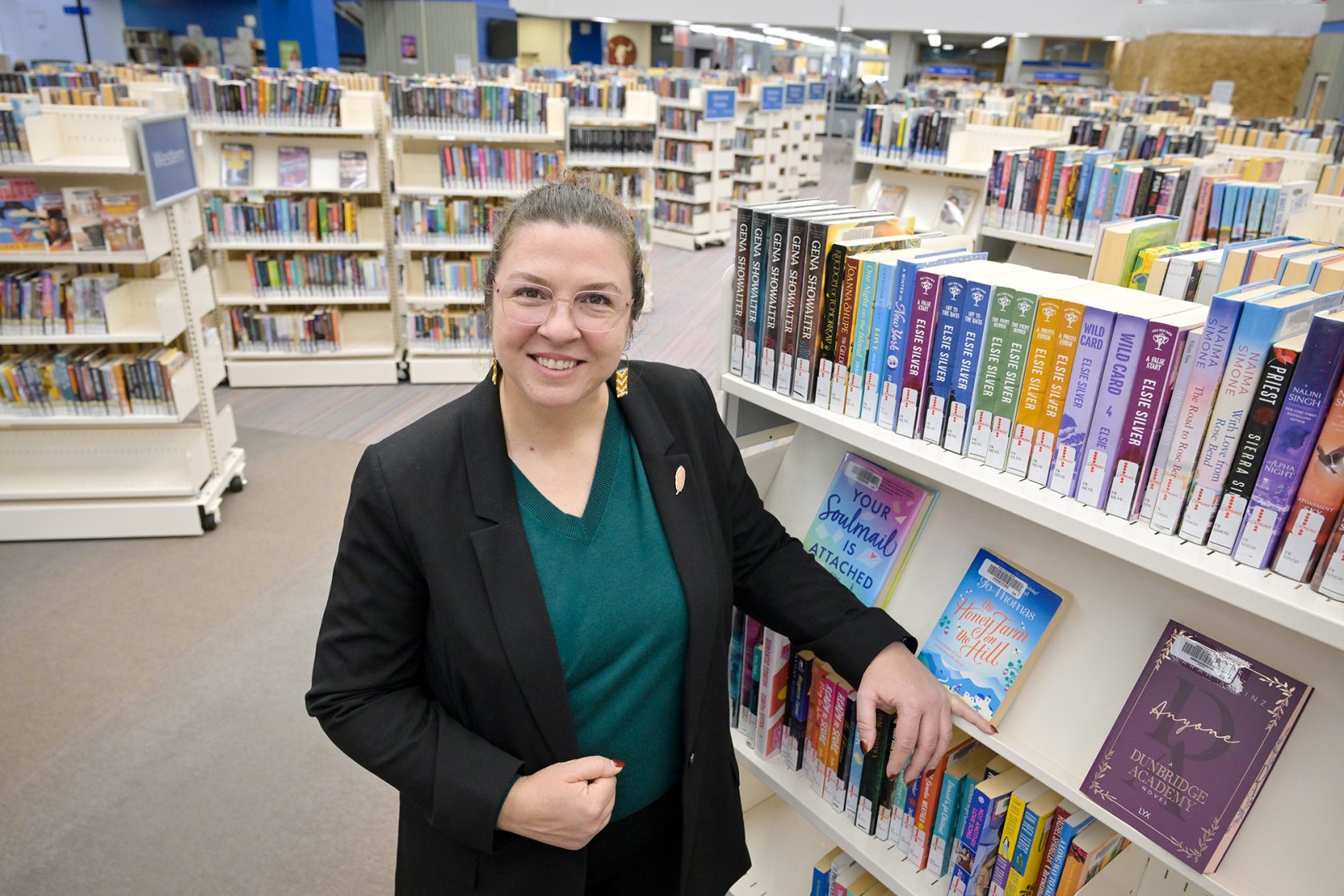
It’s National Library Month (and at press time, Saskatchewan Library Week), an opportunity to celebrate libraries and everything they make possible. It’s a perfect time to visit your local branch, pick up some fall reading material — and, as happy coincidence would have it, welcome alum Beth Côté BA’00 to her new role as of CEO of the Regina Public Library!
Beth comes to the job with more than 16 years of public library experience in Saskatchewan, most recently as Director of Public Services at the Saskatoon Public Library. Beth made some time in advance of her first week on the job to chat with Degrees about the role of libraries in building community, the pleasures of lifelong learning, and what she’s looking forward to as she returns to the library system that first stoked her love for libraries when she was a kid growing up in Regina.
What do you think public libraries do for communities?
Public libraries are a place where anyone is welcome to go. You don't need to buy anything. You don't need to belong to any specific club or group or have a membership. Anyone can go there to access information, or just spend their time in pursuit of whatever interest they have. I don't think there are a lot of places where it's okay to go by yourself, meet somebody there, and then spend all day reading: each of you in your own pursuits, but together.
I often see people in public libraries from different backgrounds, doing different types of things, in a space together. It’s very meaningful for strengthening that fabric of our community.
What drew you personally to work in libraries?
One of the important things that I feel my years at U of R gave me is an opportunity to try many different disciplines – math to business classes, to Latin, to theatre courses. I was also able to do an exchange in Northern England, and all of that started to show me what was possible. I kind of got bitten by the bug of lifelong learning — like, what if we all just kept learning?
As time went on, I did a master's in English and creative writing at Concordia University in Montréal. And when I was finished, I realized that my passion was to move into an area where everyone was welcome to learn about whatever they were interested in at any given time, free of charge. I was fortunate to have a fellow graduate who said they were thinking about library school. And it just snapped; I thought, What do you mean? Is that something you can do? Library studies married a lot of those passions for community building, placemaking, and my interest in lifelong learning and intellectual freedom.
It seems like a great job for a person who has a really broad interest base — and an amazing thing for a person who likes to go down rabbit holes.
It’s true. Public libraries are often that first place where a child seeks their own interests outside of what an adult has shown them: not just what’s on their parent’s shelves, or something that a teacher recommends. Those are also great ways for kids to find their interests, but in a public library, children are the customers themselves.
I'm not sure I would have pursued all the different interests that I have in my lifetime if I didn't have that free access to taking a deep dive into various topics through libraries, because you may not even know what you're looking for until you start looking. But the library has it all there.
In what ways do you think that the roles of public libraries and librarians have changed?
It depends on where you put the frame. Public libraries are about access to information. They're about community building. They are welcoming spaces. Public libraries are champions of intellectual freedom and providing community environments. What ends up changing is that we face different economic realities, changing information landscapes, and technological changes. There are also safety and security issues in public places in general, the types of pressures that come from outside of public libraries, and the shifting needs of the community.
We have to look at how we provide those common services around access to information. We know things change but the core of what we do stays the same. The public library must reflect its community. We always have to be reevaluating what it is that the community needs, making sure that we're paying attention, hearing what it is that the people of Regina want from their library and making sure we respond to those things while keeping our core values in place.
What do you wish more people knew about public libraries?
Today’s library is a vibrant, modern service that offers books and more. As busy adults we can start to think nostalgically about the library as a thing of the past, and that they’re no longer relevant. But people need that welcoming community space, the books, and the free programming at different times in their lives: when they have children, later in life after they’ve retired... Even if we're not necessarily using the library right now, we can think about the times when we have used the library and when we might need it again, because it's always there for us.
It’s a nice full circle that you’re now leading the library you used to visit as a child.
I know. I'm pretty excited about this new position and getting to meet the RPL team that has been doing all the good work at RPL, getting to understand their goals and what they've been working on, and then really getting to know the community in Regina again. I haven't lived in Regina for a couple of decades and I'm looking forward to reacquainting myself with the community, getting to know the people who call Regina home, what their wants and needs are, what they're looking for in their library, and really getting a sense of what the public library means, or could mean, to the people of Regina. It’s particularly exciting for me to be able to return to the library system that taught me what a public library is; the one that actually built that passion for me.
This interview was condensed for length and clarity.
Photography: Trevor Hopkin, University of Regina Photography
2026 Alumni Awards and Sports Hall of Fame
Read More

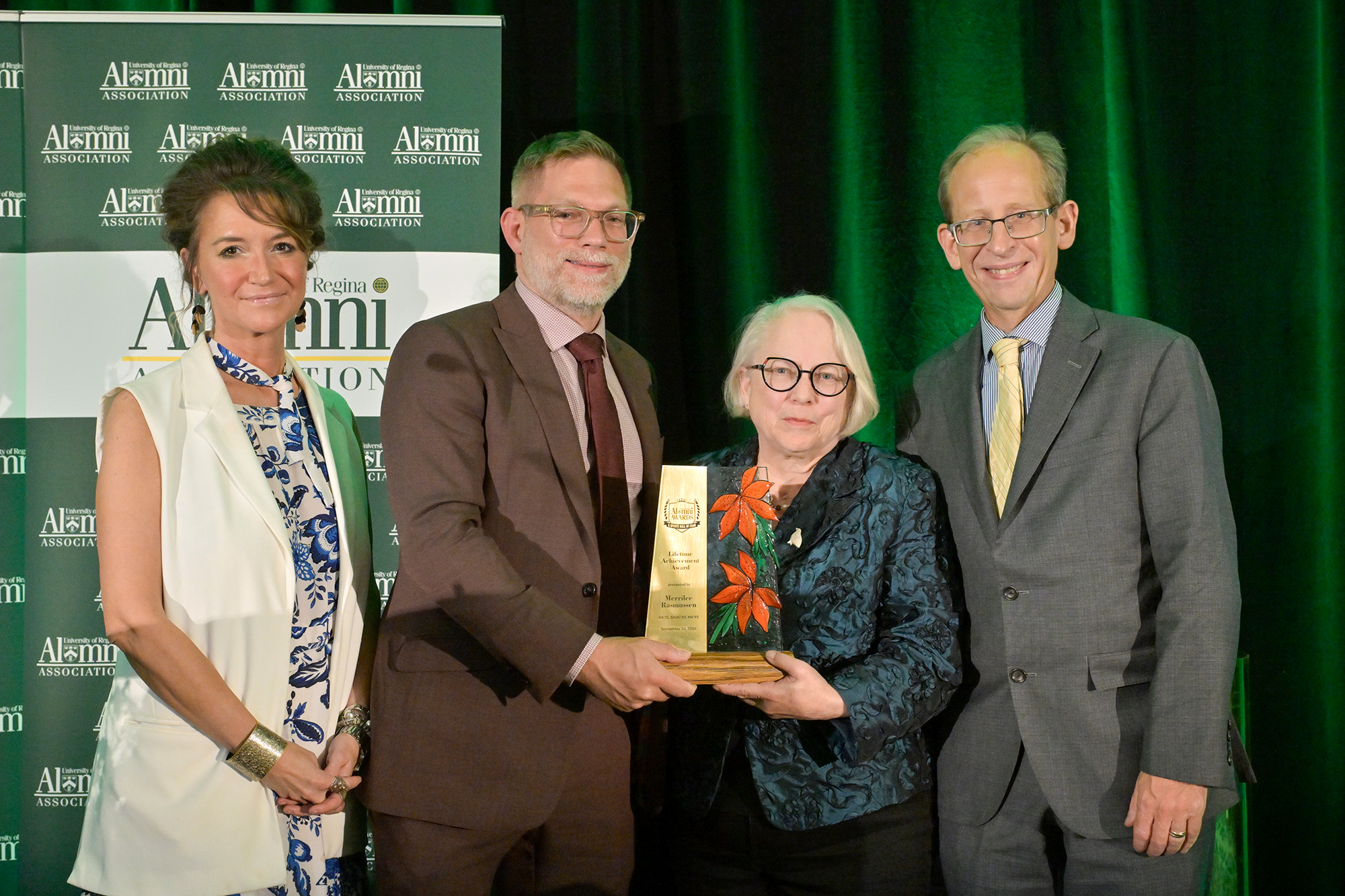 Merrilee Rasmussen BA'72, BAHC'89, MA'95 (centre) accepts Lifetime Achievement Award, pictured with (l-r) Jennifer Murray, President, URAA; Dr. Tobias Sperlich, Interim Dean, Faculty of Arts; Dr. Jeff Keshen.
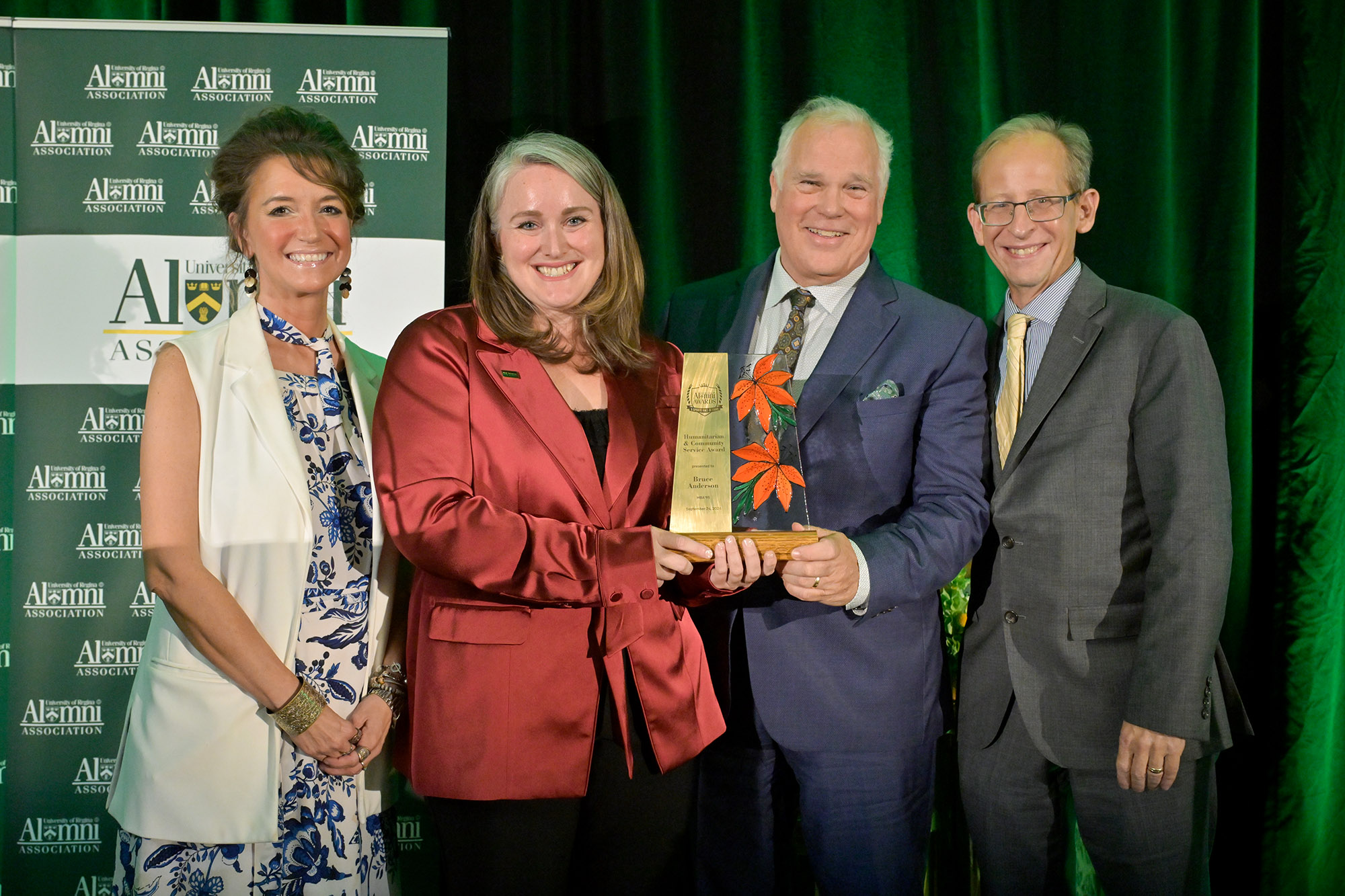 Bruce Anderson MBA'95 (centre) accepts Humanitarian & Community Service Award, pictured with (l-r) Jennifer Murray, President, URAA; Dr. Erin Oldfor, Dean, Hill Levene School of Business; Dr. Jeff Keshen
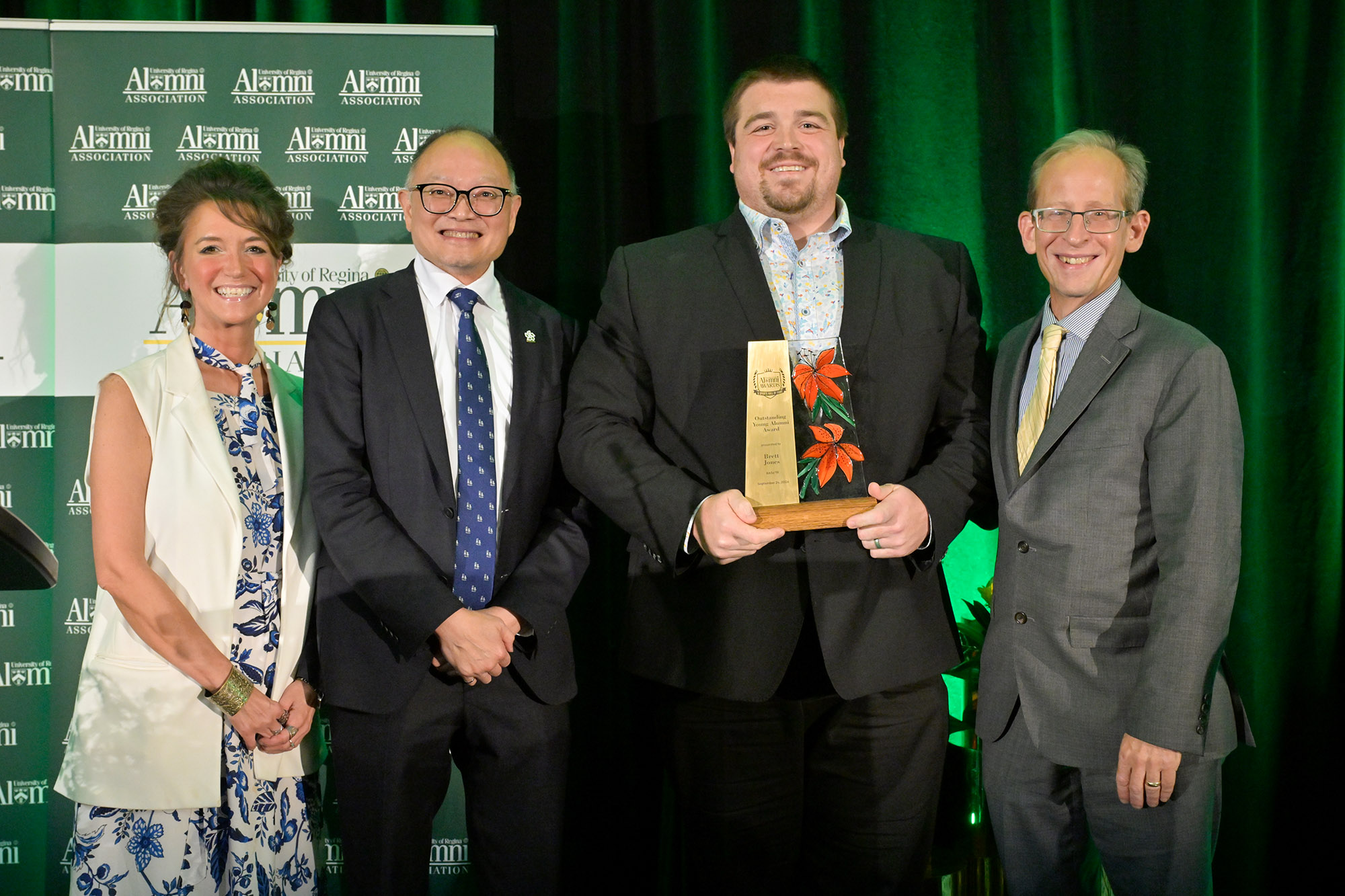 Brett Jones BASc'19 (centre) accepts Young Alumni Award, pictured with (l-r) Jennifer Murray, Dr. Phillip Choi, Dean, Faculty of Engineering and Applied Science; and Dr. Jeff Keshen.
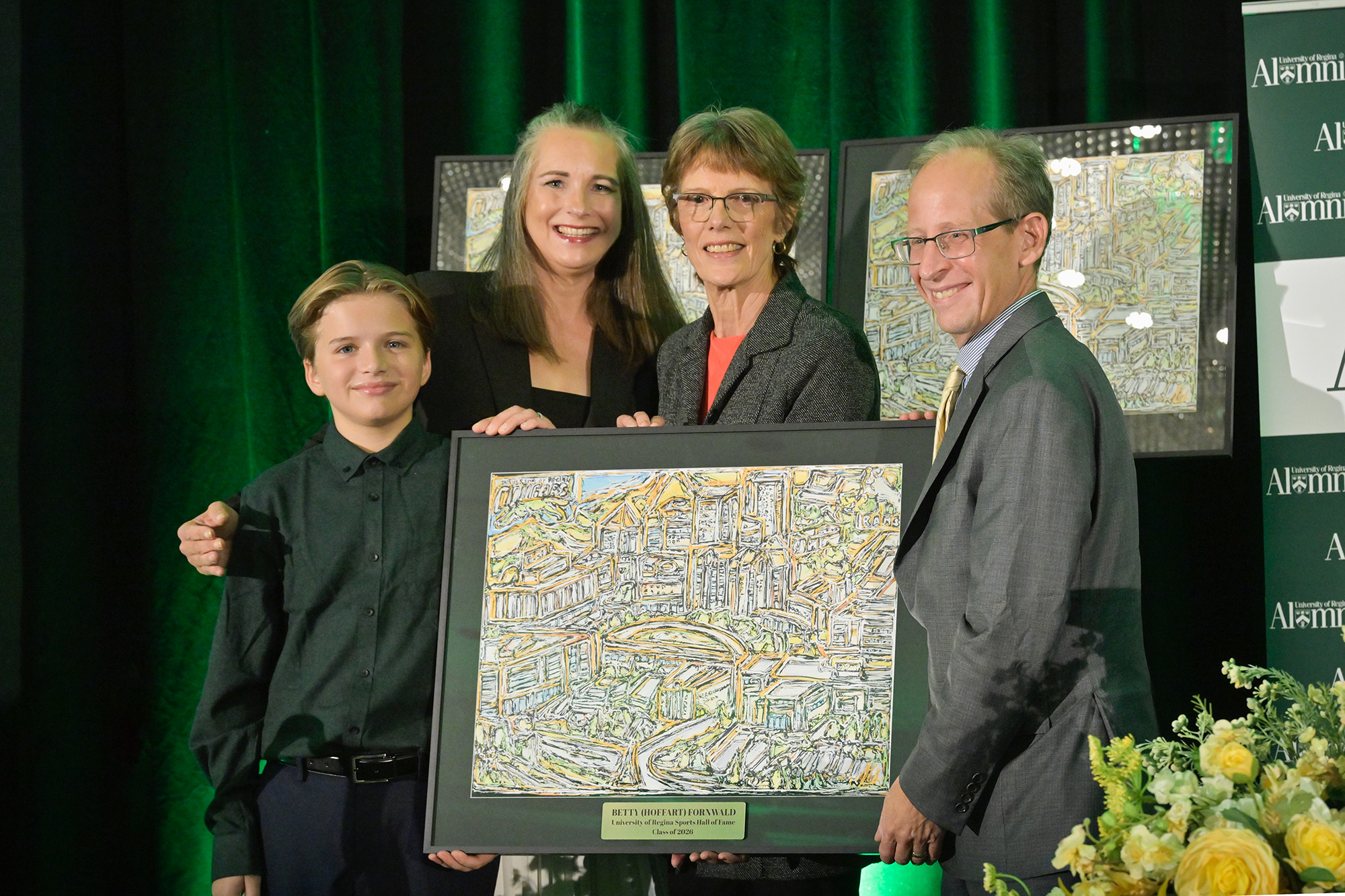 Betty (Hoffart) Fornwald BEd'81 (centre) is inducted into Sports Hall of Fame, pictured with (l-r) grandson, Lisa Robertson, and Dr. Jeff Keshen.
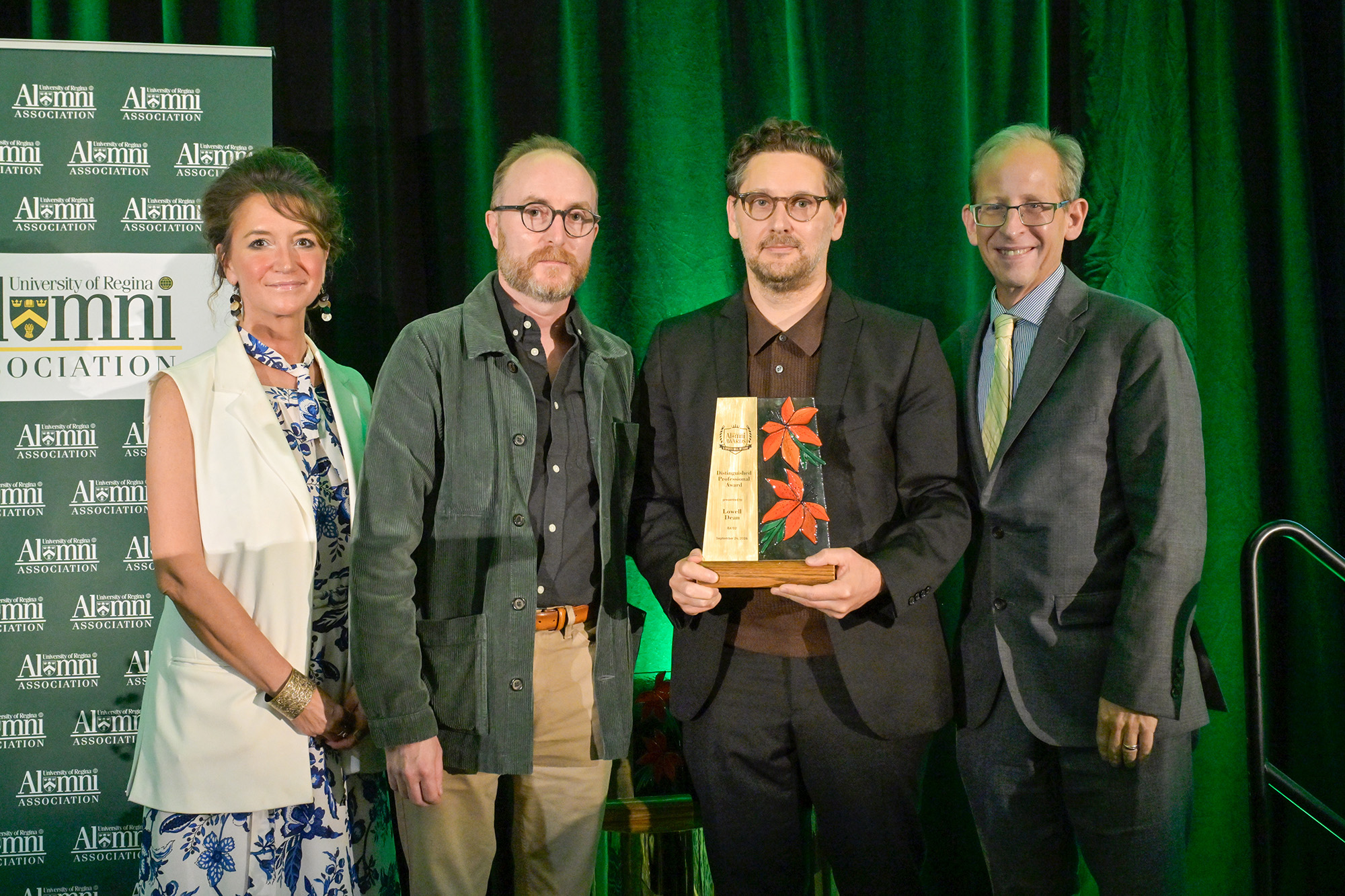 Lowell Dean BA'02 (centre) accepts Distinguished Professional Award pictured with (l-r) Jennifer Murray, President, URAA; Mike Rollo, Department Head, Department of Film; and Dr. Jeff Keshen.
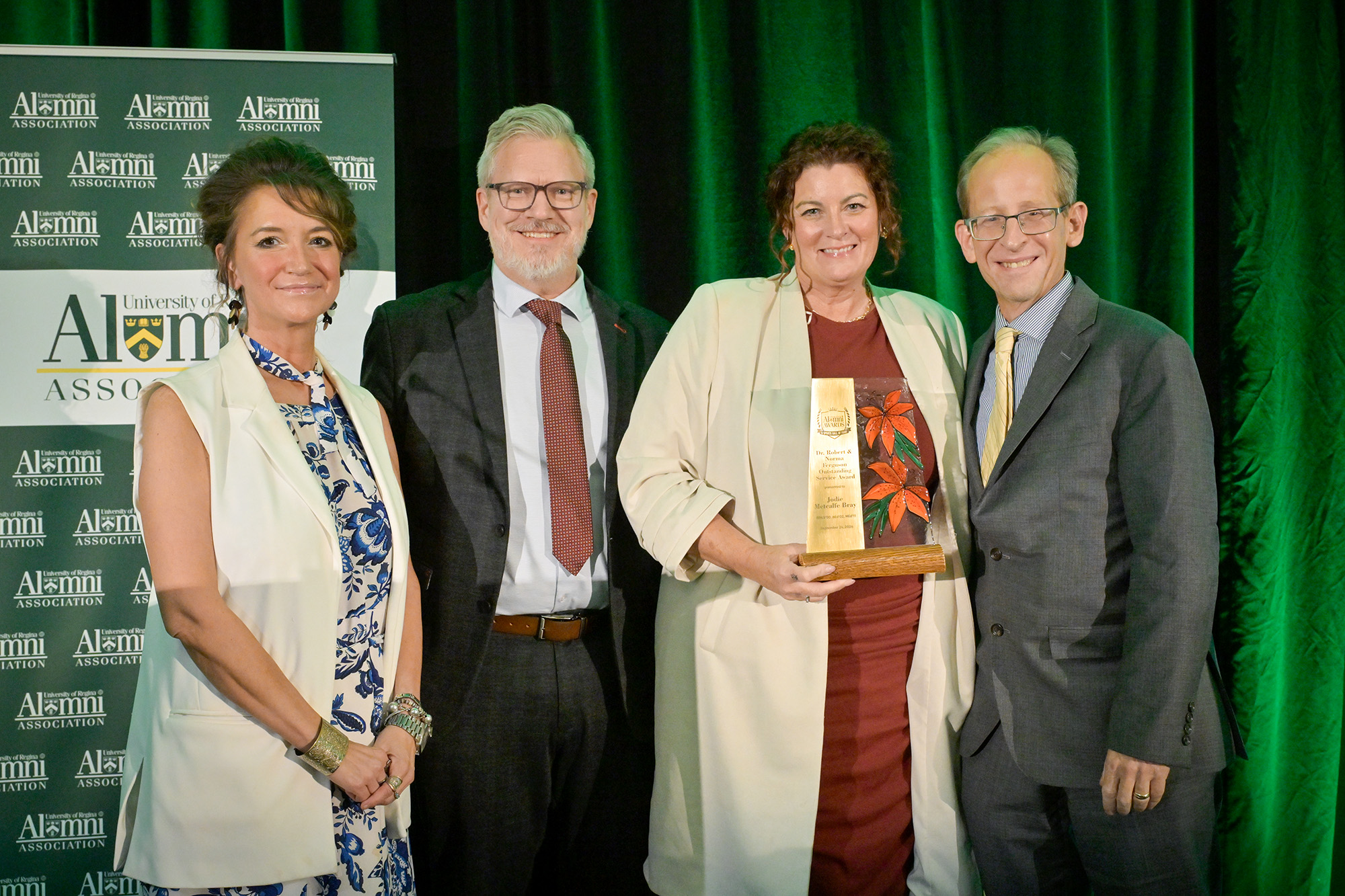 Jodie Metcalfe Bray BPAS'00, BEd'02, MEd'11 (centre) accepts Dr. Robert & Norma Ferguson Outstanding Service Award, pictured with Jennifer Murray, President, URAA; Dr. James Nahachewsky, Dean, Faculty of Education; and Dr. Jeff Keshen.
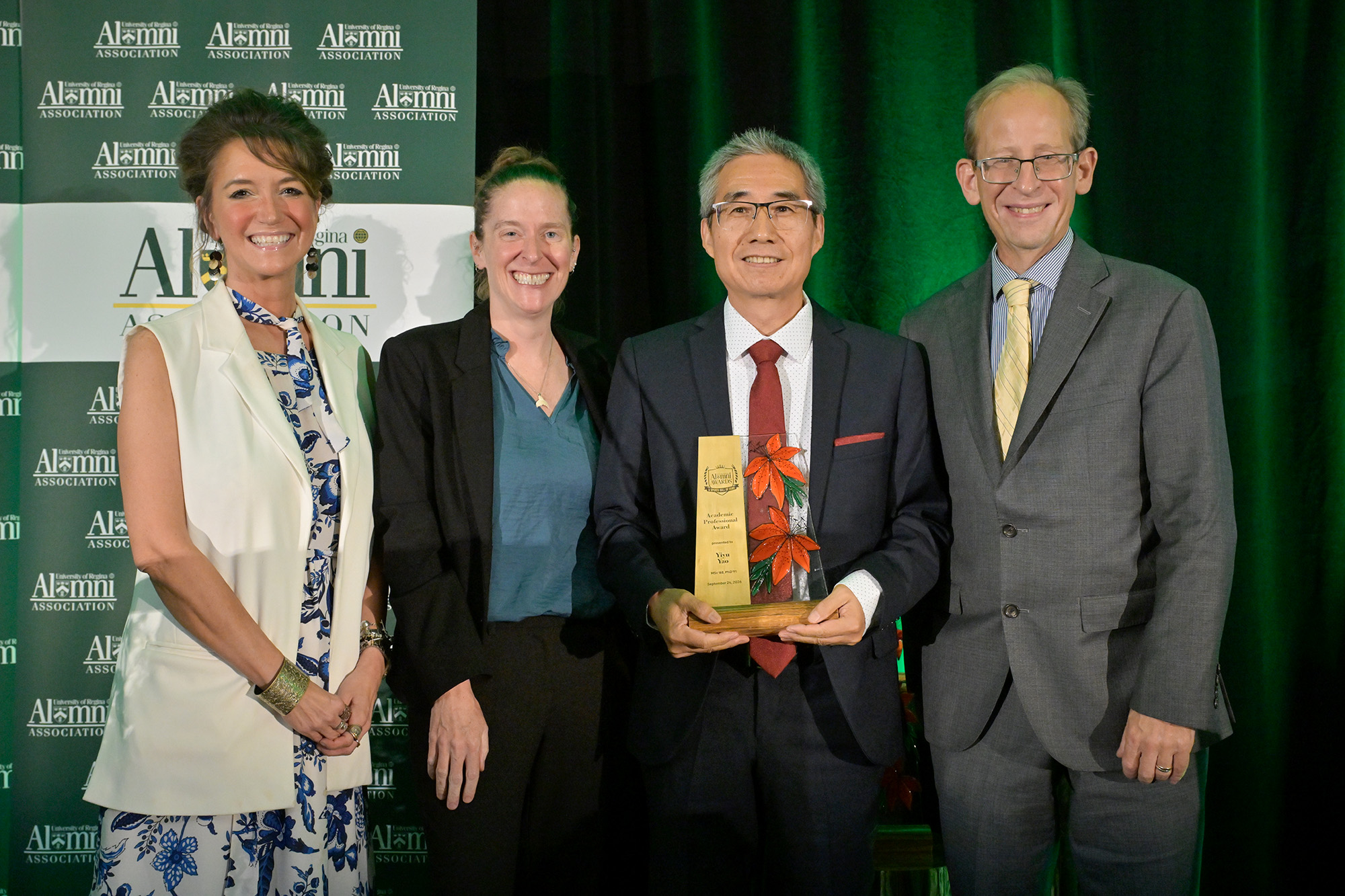 Dr. Yiyu Yao MSc'88, PhD'91 (centre) accepts Academic Professional Award, pictured with (l-r) Jennifer Murray, President, URAA; Dr. Mel Hart, Interim Dean, Faculty of Science; and Dr. Jeff Keshen.
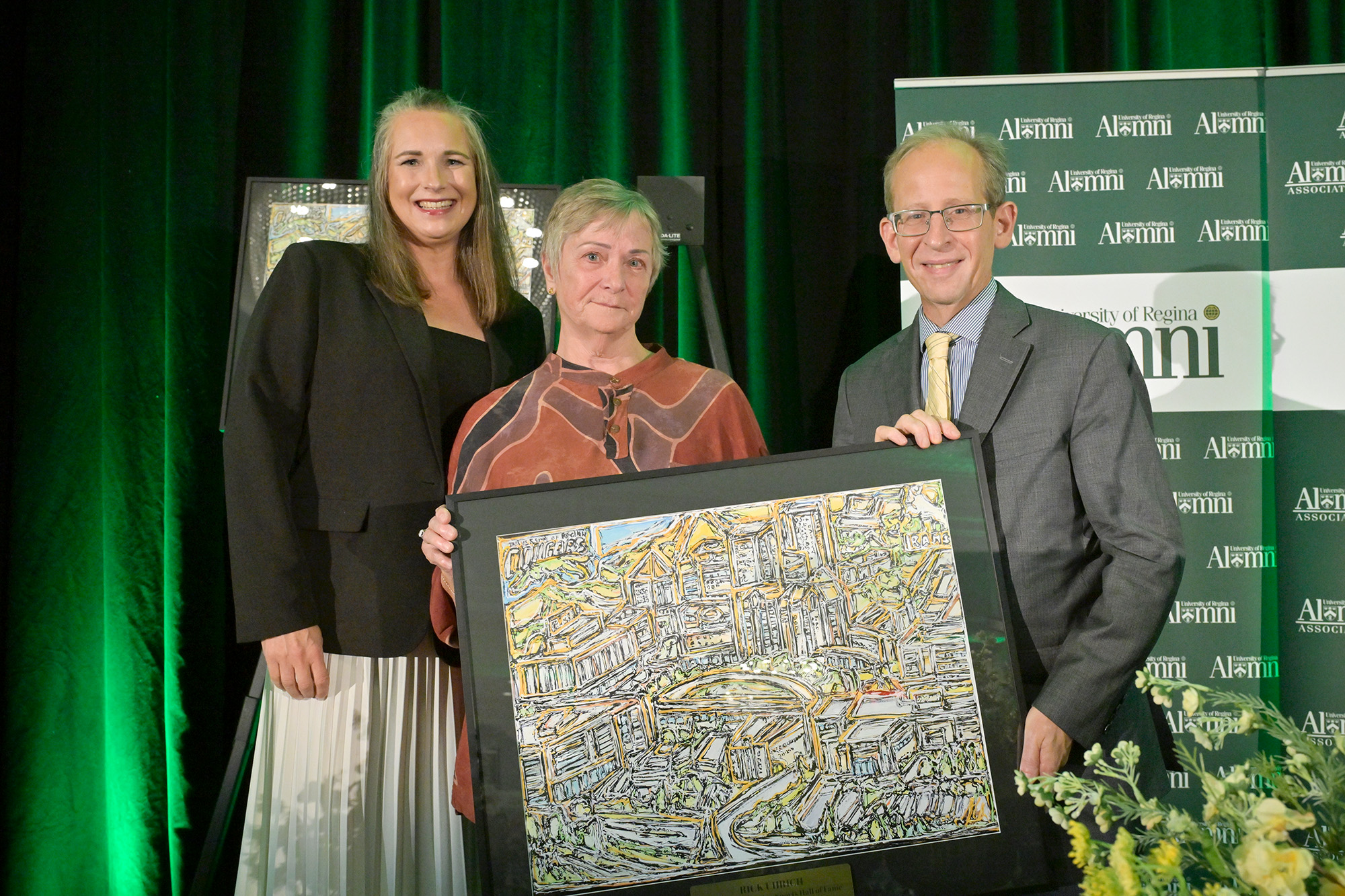 Jill Wellman (centre) accepts Rich Uhrich's posthumous induction into the Sports Hall of Fame. Pictured (l-r) Lisa Robertson, Jill Wellman, and Dr. Jeff Keshen.
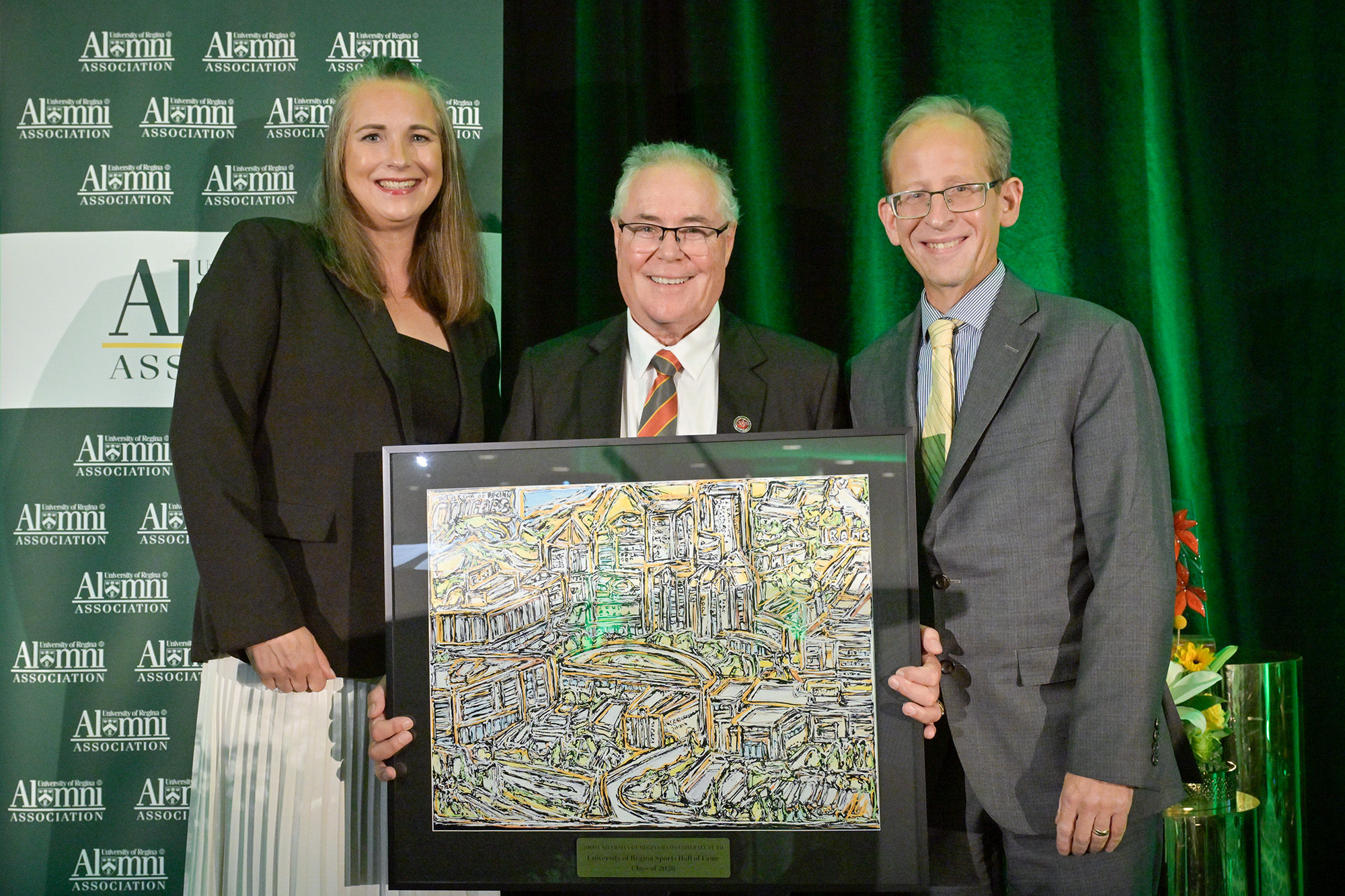 Frank McCrystal, coach, 2000 U of R Rams accepts 2000 Rams' induction to Sports Hall of Fame, pictured with Lisa Robertson and Dr. Jeff Keshen.
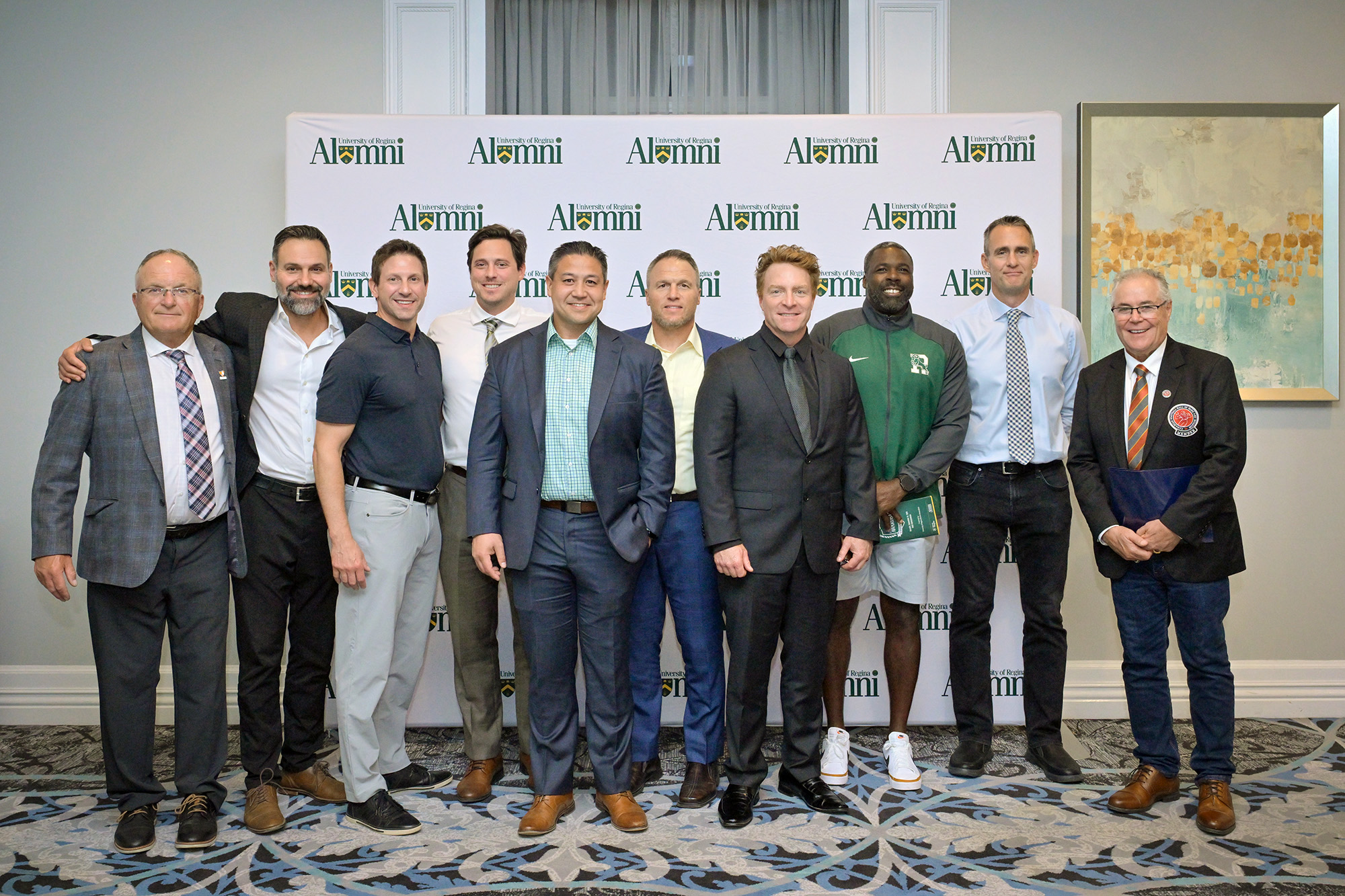 Members of the 2000 Rams team and coaching staff.