Born in Holdfast, Saskatchewan, artist David Thauberger BFA’71 (1948 – 2026) made an indelible mark on Canadian art, and one that will be recognized for generations. Renowned for his paintings and prints featuring Saskatchewan’s unique vernacular architecture, his formal training began at the University of Saskatchewan, Regina Campus. His special connection with the University will endure thanks to his contributions to the University of Regina’s President’s Art Collection and the Dr. John Archer Library and Archives.
“David started off as this brash art student at the U of R looking for something that would allow him to explore his experiences of life,” says Timothy Long BFA'86, BAHons'86, former Head Curator at the MacKenzie Art Gallery, who co-curated the retrospective Road Trips and Other Diversions with Sandra Fraser of the Mendel Art Gallery in 2014–15. “He didn’t find it at first—in his mind, the modernist movement had come and gone and had become rigid and uninviting”  

When David Gilhooly, a leading ceramicist within the Funk art movement in California, arrived to teach at the University in 1969, it opened a door for Thauberger. “He learned that art can be fun, it can be about your own personal experience, it can be irreverent and can take you to places in your imagination that can have no limit,” Long explains. Thauberger began emulating Gilhooly ‘s playful style by crafting clay sculptures of items such as a Thanksgiving turkey covered in perogies and cabbage rolls. He had barely finished his undergraduate degree when he was given a solo exhibition at Memorial University that toured Atlantic Canada. After completing his MA in California and MFA in Montana, Thauberger returned to Regina, where he began painting in the style for which he is best known. 

That style evolved due, in part, to his work for the Saskatchewan Arts Board’s (now SK Arts’) Permanent Collection, where he discovered Saskatchewan folk artists, also known as self-taught artists. “He realized through their work that rural Saskatchewan was every bit as exotic as the work he was seeing in California and Chicago,” Long says. “He made work about the rural, agricultural, ethnic and local experience, always keeping in mind the broader picture—that we live in an urban, industrialized, international society that we’ve all assimilated through mass media. He could see things as both local and cosmopolitan.” 

Thauberger maintained his strong connection with the University of Regina throughout his artistic career. He donated work by other artists to the University of Regina Collection at the MacKenzie Art Gallery, gifts of his own work to the President’s Art Collection and made regular donations of his papers to the University Archives. The donations to the collection and archives work together—students, staff and visitors can see his works on the walls throughout the University, and then they have the ability to “meet” the artist through the materials found in the archives. Thauberger’s contributions to the archives include articles, catalogues, correspondence, newspaper clippings, artworks, photos and slides of Canadian folk art, all of which were donated since 1985.
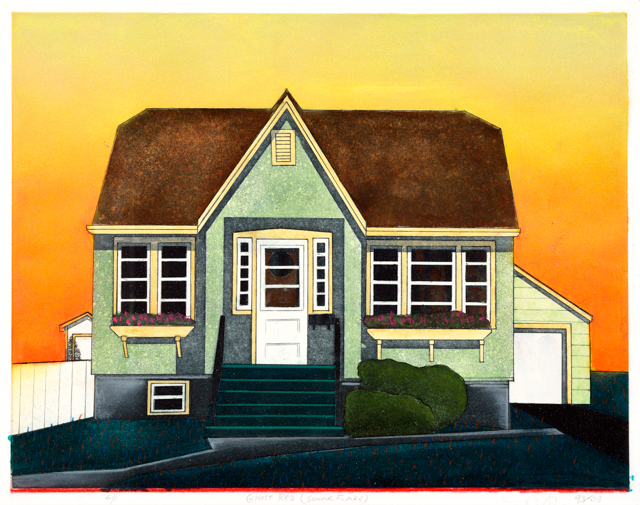
 

David Thauberger, 'Ghost Red (Solar Flare)', 1993–2003, acrylic pastel, drypoint, aquatint etching (edition of 35); University of Regina President's Art Collection; pc.2017.46

The archives don’t usually include finished artworks—those often will go to the President’s Art Collection—rather, they contain material that supports finalized pieces, like sketches, various iterations, layers in silk screening and colours used. “Researchers already know what the finished piece looks like,” says Alyssa Hyduk, University Archivist. “But they want to know about the process and the thought behind the process.”  

While Hyduk had the privilege of meeting Thauberger in person, she recognizes that many wouldn’t have had that opportunity. The archives are a way to put the artist in perspective and bring his artwork to life, so researchers and members of the public can see his personality in the record. 

“The finished piece is what the artist wants you to see. What they put up in the gallery, that’s the polished them showing. Those processes, those mess-ups, those sketches, those letters between friends and artists that express happiness and challenges—that is the side of the person that they weren’t guarding. There is a big vulnerability and openness in that record. That’s why I enjoy getting those records of artists,” Hyduk says. 

While the archives give a unique glimpse behind the scenes, the President’s Art Collection puts artists’ work front-and-centre. The collection contains more than 1,000 works of art; over 50 per cent of that work is installed around campus to enhance working and learning environments.  
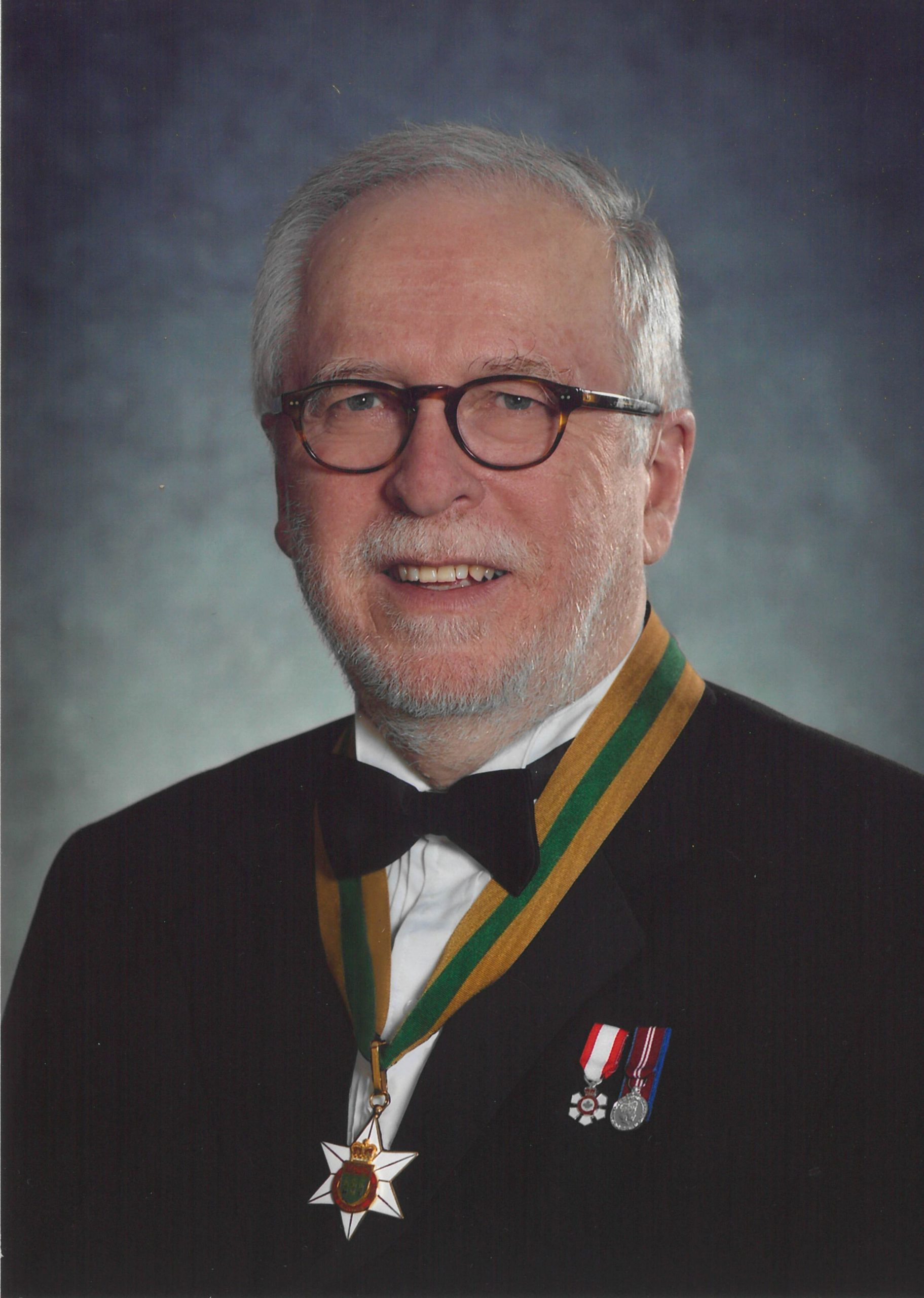
David Thauberger with Order of Canada medal. University of Regina Archives and Special Collections; David Thauberger Fonds, 2026-37, Box 3, File 21, photograph 3. Photograph by Digneyphotographics.

Nine pieces of Thauberger’s art are currently in the collection, with eight on display throughout the University, and a future donation in the works. “David started off studying education and had a love of teaching and learning that we saw throughout his career,” says Julia Krueger, Curator/Preparator of the President’s Art Collection. “He was always so generous and open, genuinely excited to share his knowledge with students, other artists and collectors. The project the Archives and the President’s Art Collection were working on with him reflects that again—creating opportunities for people to see his work, his creative process and other pieces he collected as well.”  

For Krueger, it’s fitting to have Thauberger’s work on display throughout the University. “One of the things the President’s Art Collection does is celebrate alumni accomplishments,” she says. “As an alumnus, David made such a mark on the Canadian art landscape. Important accomplishments should be celebrated through the display of art around campus and connecting with the community. In his practice, his paintings elevate the everyday here and now—installing paintings of Saskatchewan on the walls really grounds the University in the ‘here’, not somewhere else. It shows that we can look around and celebrate what’s around us.” 

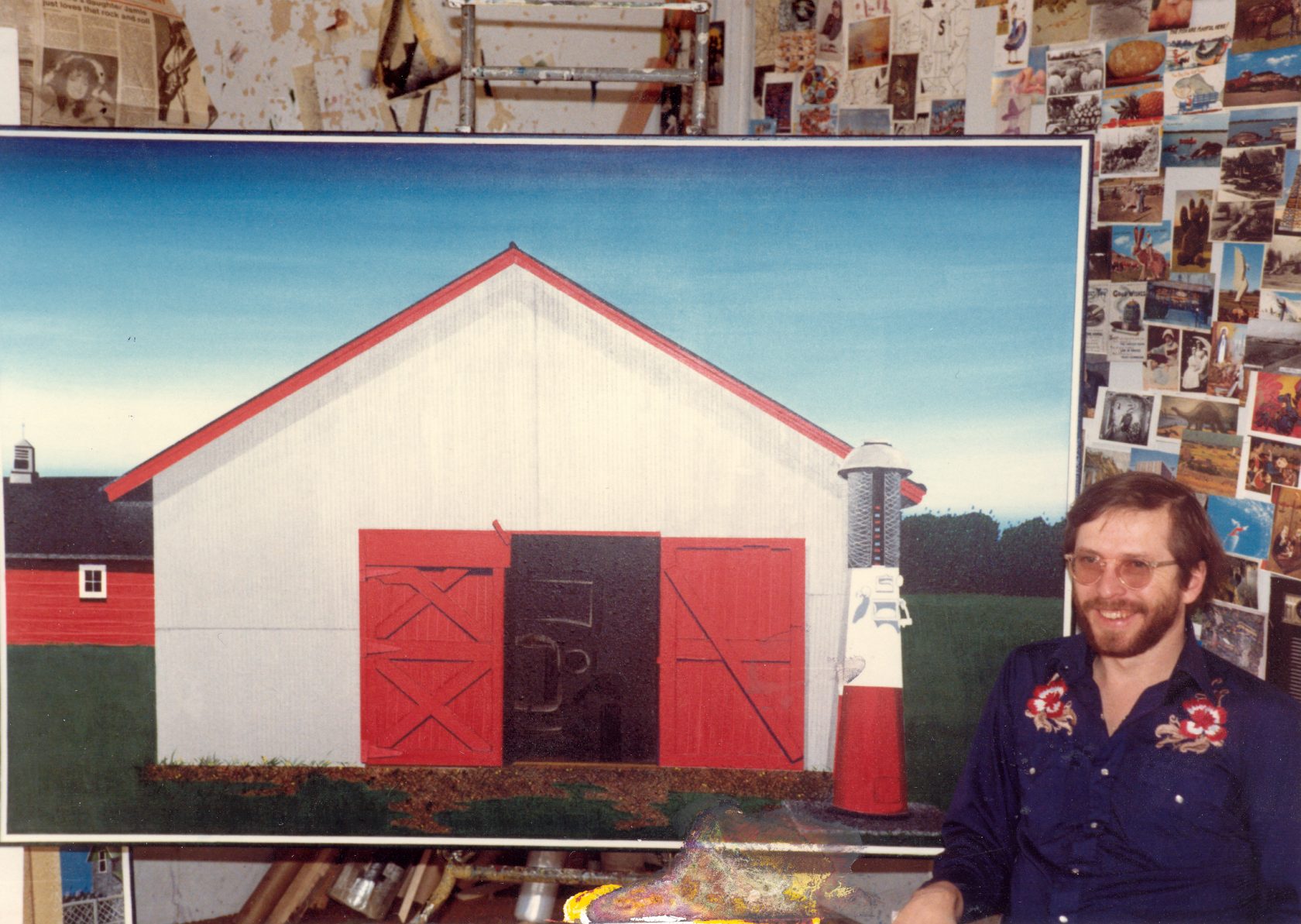
Banner image: David Thauberger in his studio in the 1980s. University of Regina Archives and Special Collections; David Thauberger Fonds, 86-69, Box 9, File 4, photograph 158.
About the Author

Sabrina Cataldo is an award-winning Regina writer and communications specialist.

WP_Post Object ( [ID] => 10124 [post_author] => 20 [post_date] => 2026-08-18 17:36:20 [post_date_gmt] => 2026-08-18 23:36:20 [post_content] =>

Karlie Butler has always been a dog person, but it wasn't until he took a sabbatical from his position at the University of Regina in 2017 - 18 that he got serious about them. "In addition to my sabbatical activities, I started volunteering at the Regina Humane Society (RHS), walking dogs. I began observing dog training classes because I wanted to improve my skills as a volunteer," he says. Not long afterward, he became more interested in training and was accepted into an eight-month apprenticeship, becoming a contract trainer at the RHS in 2018.

The RHS requires its trainers to achieve the "Certified Professional Dog Trainer Knowledge Assessed" credential from the Certification Council for Professional Dog Trainers. This involves hands-on and online learning, including passing an exam. "To maintain the credential, you have to do a certain amount of professional development over the three-year renewal cycle. I work a lot with behaviour rather than obedience and sport, so I prefer to take courses on topics like loose leash walking and behaviour modification to apply them to the training I do," Butler explains. The licensed trainers then pass their knowledge on to dog owners by teaching them to train their own dogs in training classes.

Butler's first experience with dog training was taking his dog, Bella, to classes in about 2016, shortly after he adopted the seven-or eight-year-old chihuahua cross from the RHS. (She recently passed away at the age of 16.) Butler learned firsthand the challenges-and rewards-of having a dog with behavioural issues. "Bella had a lot of anxiety, which made the first two years of owning her not the easiest experience. I took her through foundations training, and she didn't do very well. I was stuck on the idea that she needed to do it again, but the trainer encouraged us to take just a silly tricks class," he says. Butler soon learned that it's possible to teach an old dog new tricks. "She was voted 'most improved' in the tricks class. We had a lot of fun. That experience really changed my attitude toward her. She was driving me a bit nuts before but taking that tricks class and learning little things like 'high five' changed my relationship with her. Little victories gave me the confidence to keep working with her, both on general relationship building and the behavioural concerns at the time."

Butler understands the challenge of having a dog with behavioural issues, and he wants others who may be struggling to know that "behaviour can change. Even if it's stressful or looks impossible right now, that doesn't mean it can't get better." He notes that owners need to be patient and willing to put in the work. "It's like human behaviour: people don't change overnight. Neither do dogs. But there's hope and potential for things to improve. It's easy to get stuck just seeing the behavioural problems with your dog," he says. "Of course, work on the behaviour but also look past the behaviour and have fun with them when you can."

Butler sees parallels between dealing with dogs and people in everyday life. "You don't always know-whether it's a dog or a person-what someone's going through, what's going on in their heads, what might be difficult or challenging for them," he says. "You need to have an open mind and be understanding. Patience is a large part of working with dogs, especially dogs with behavioural struggles. And as stressors in the world for people increase, you need to have a willingness to be adaptable and approach things in different ways-it's not 'one size fits all."

For those interested in becoming a dog trainer, Butler suggests connecting with a current trainer and shadowing them. "Having a mentor is essential to learning that side of dog training. Then apply what you're learning wherever you can-with your own dogs or volunteering with dogs at places like the RHS," he says. "Finding opportunities to work with dogs is important. Volume doesn't equal skill, but volume offers the opportunity to practice skills. This is really applied knowledge."

As National Dog Day reminds us, the bond between humans and dogs is worth investing in. And if you're struggling with a dog whose behaviour feels overwhelming, Butler's advice is simple: find help and put in the work, but also be patient, look past the problem, find the fun and trust that things can get better. Because, after all, even an anxious chihuahua can learn to high five.

Individual holding dog. Karlie Butler BA'04 and friend at the Regina Humane Society's former home on Armour Road in 2018.
Five tips for bringing a new dog into your home


Fall is a great time to welcome a new canine friend to your home; it's still warm enough to get some solid outdoor training time, and a good opportunity to incorporate your dog into work and school routines. Karlie offers five tips for making that transition a smooth one.


Banner image: Karlie Butler BA'04 on the University of Regina main campus. Photo: Trevor Hopkin, University of Regina Photography.

[post_title] => Ask an alum! Karlie Butler BA’04 turns a love of dogs into service to community [post_excerpt] => [post_status] => publish [comment_status] => open [ping_status] => open [post_password] => [post_name] => ask-an-alum-karlie-butler-ba04-turns-a-love-of-dogs-into-service-to-community [to_ping] => [pinged] => [post_modified] => 2026-09-16 17:00:38 [post_modified_gmt] => 2026-09-16 23:00:38 [post_content_filtered] => [post_parent] => 0 [guid] => https://www.degreesmagazine.ca/?p=10124 [menu_order] => 0 [post_type] => post [post_mime_type] => [comment_count] => 0 [filter] => raw ) WP_Post Object ( [ID] => 10229 [post_author] => 20 [post_date] => 2026-09-16 15:35:19 [post_date_gmt] => 2026-09-16 21:35:19 [post_content] =>

Marc Mueller BBA'13 had a unique upbringing; His earliest memory is running around the locker room of the Saskatchewan Roughriders. His dad, Larry, was the assistant general manager of the Riders, and his grandfather, Ron Lancaster, was an iconic player and coach, so Mueller had access to places kids rarely get to go. "My grandfather was the head coach in Edmonton in the 90s. And I remember my favorite place to go was the locker room. Just being able to be around the guys-they were larger than life to me," he remembers. "I got to play crib and help out, do stuff at practice and learn, sit in meetings and things like that. It was a very cool upbringing." 

So, it's no surprise that Mueller followed in his father's and grandfather's footsteps to become part of the Riders team as a coach. "It's been kind of the family business. And it's always been a part of my life," he says. 

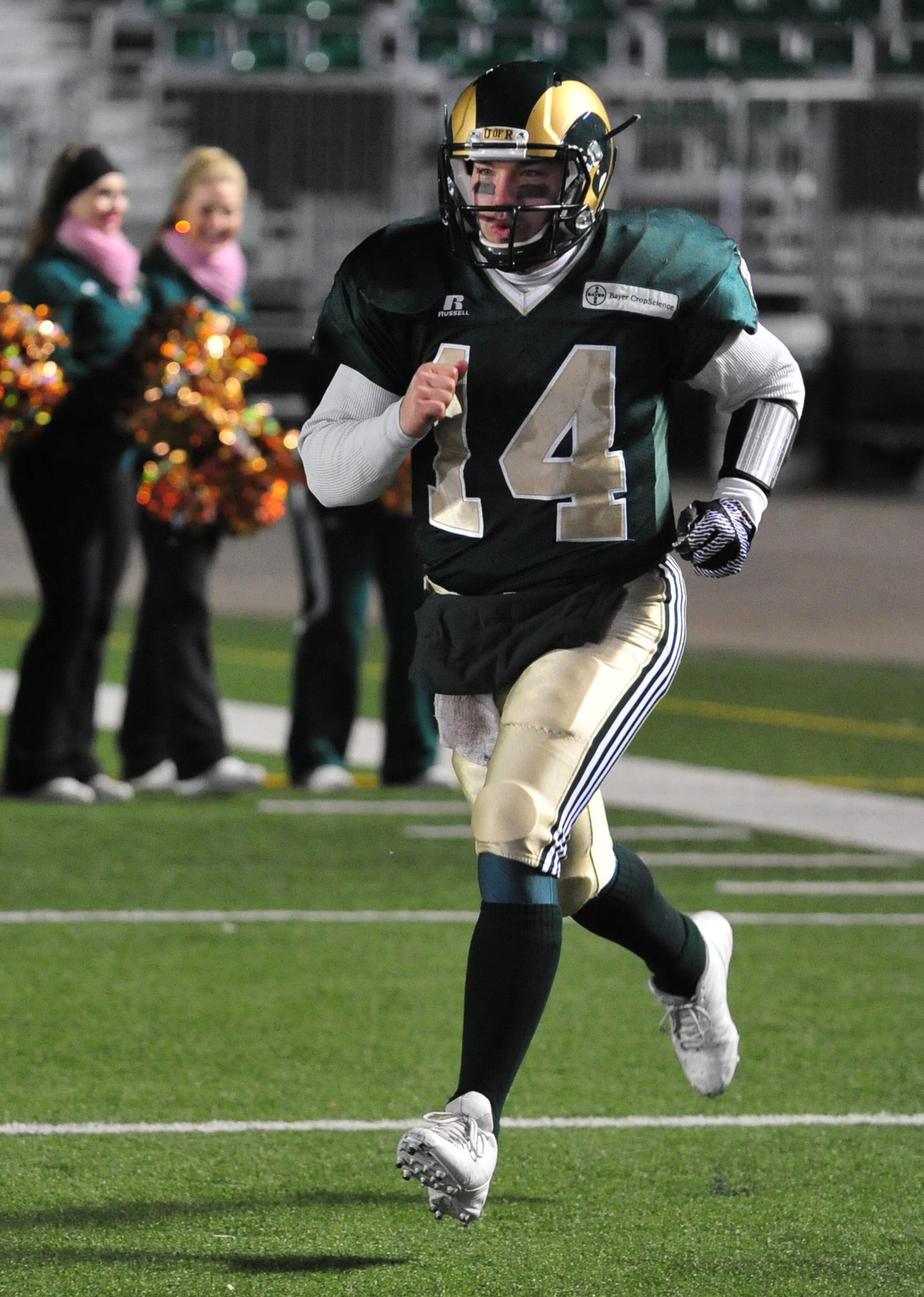
Mueller's journey to the CFL began at Sheldon Williams Collegiate in Regina, followed by football camps with the Regina Rams. Then, he attended the University of Regina, where he was a quarterback for the Rams from 2007-12. "To be able to be the young kid that came to the Rams football camps and then play for the team and coach at the Rams camps was pretty special," he says. 

Just as in childhood, Mueller's favourite memories of the Rams is hanging out with the other players, this time in the Rams' clubhouse. "Having the clubhouse attached to the university is a big deal because in between classes, we would all go back to the clubhouse. And whether it was to study or play cards or work out, we were together a lot. I spent a lot of time in that clubhouse, and it's still very special to me," he recounts. He continues to stay in touch with the guys he played with on the Rams. The majority of the groomsmen at his wedding were fellow players, and he also frequents businesses operated by former Rams. "Not a day goes by that I don't look back and reflect on all the positives and all the fun I had as a Ram." 

Mueller sees the Regina Rams as an important training ground for future CFL players and coaches: "It's very player driven-whether it's the alumni giving back to the players or the coach spending extra time with the players. They're well coached, and when they leave the Rams program, they're ready to not only give back to the community, but to perform and make a CFL roster," he says. "Everyone knows about the Rams. It's a good program, and every year it seems to be getting better."  

Marc Mueller BBA'13 on the field for the U of R Rams. Photo: U of R Photography Marc Mueller BBA'13 on the field for the U of R Rams. Photo: U of R Photography
Mueller believes that supporting the Rams makes a major impact on the community. "So many people from programs like the Rams give back to the community, whether it's coaching in high school or coaching sports anywhere," he says. "When you're investing in the Regina Rams, you're not only investing in the team on the field, but you're investing in the young men off the field who will also invest in the community moving forward." 

Unfortunately, while Mueller was playing for the Rams in 2011, he got hurt and missed the entire season. But there was a silver lining: head coach Frank McCrystal (who had also coached Mueller's dad when he played with the Rams) and offensive coordinator Bernie Schmidt saw Mueller's potential as a coach. "They let me coach a bit and be a part of the coaching staff to see if I wanted to do it in the future. And I loved it," he recalls. "My whole life, I always wanted to coach. I wanted to play as long as I could and then I wanted to get into coaching right away. I was very fortunate to be able to do that." . After playing one more season upon recovering from his injury, Mueller coached quarterbacks for the Rams for a year. Then he got the call to be an assistant coach for the Calgary Stampeders. 

"When you're investing in the Regina Rams, you're not only investing in the team on the field, but you're investing in the young men off the field who will also invest in the community moving forward."

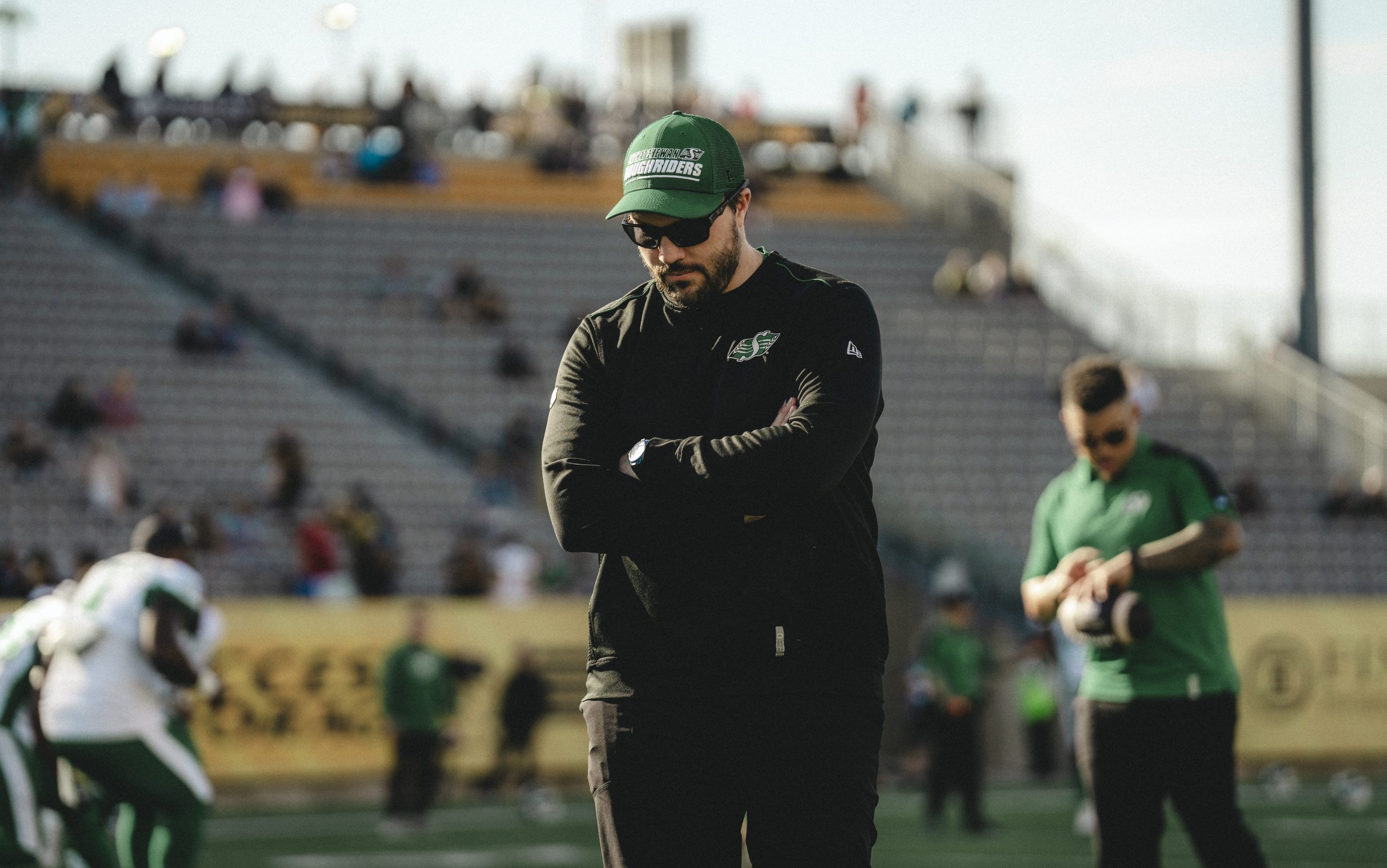
Make a gift to Varsity Sport at the U of R on September 22 - Day of Giving - and double your impact! Marc Mueller BBA'13 coaching for the Saskatchewan Roughriders. Photo courtesy Saskatchewan Roughriders Marc Mueller BBA'13 coaching for the Saskatchewan Roughriders. Photo courtesy Saskatchewan Roughriders

As a CFL coach, Mueller has hoisted the Grey Cup three times in his career (so far): twice with the Calgary Stampeders and most recently with the Saskatchewan Roughriders. He says each experience was unique.  

His first Grey Cup win was in his initial year with Calgary in 2014: "It was just such a whirlwind. You're kind of holding on by the seat of your pants, not really knowing what to expect," he says. "And I got to coach defense that year, which I had never done before. That was really an eye-opening opportunity. And I think without that season on defense, I wouldn't have been able to survive on offense the next year. So, I'm very grateful for that." 

The second was with the Stampeders, again, in 2018: "We had been there [at the Grey Cup] the previous two seasons and not won. We were the heavy favorites in those two games. And to finally get back and do it was pretty special."  

And then there was the 2025 win with the Saskatchewan Roughriders: "Obviously, this past year was amazing. I was lucky enough to come with Corey Mace [Roughriders' head coach], back to Regina, to move back to Regina with a family," he says­­. "My family lives here. My wife's family lives here. Everybody's here. Coaching is hard on the families-I'm not around a whole bunch for the seven or eight months of the season. So, to win it is truly a family honour or family award. And to see them enjoy it was my favorite part." 

Saskatchewan Roughriders' Grey Cup wins are a bit of a family business as well. The family has been involved in three out of five Grey Cup wins in the Riders' history: his grandfather in1966; his father in 1989; and now Mueller. 

Now that Mueller has a family of his own, he's continuing traditions that started in his own childhood. "Now, I get to take my children to Mosaic Stadium and let them run around the locker room or the field, and my parents come as well," he says "My daughter gets to look at the Grey Cup photos in the coaches' offices, and there's a picture of her great grandfather, Ron, her grandpa, Larry, and now there's a picture of me, which is pretty cool. I feel like I had the best childhood ever. And I hope that my kids can have the same thing now that I'm involved."  

Banner image: Marc Mueller BBA'13 coaching for the Saskatchewan Roughriders at Mosaic Stadium. Photo courtesy Saskatchewan Roughriders.

[post_title] => Marc Mueller BBA’13 [post_excerpt] => [post_status] => publish [comment_status] => open [ping_status] => open [post_password] => [post_name] => marc-mueller-a-family-business [to_ping] => [pinged] => [post_modified] => 2026-09-16 17:11:48 [post_modified_gmt] => 2026-09-16 23:11:48 [post_content_filtered] => [post_parent] => 0 [guid] => https://www.degreesmagazine.ca/?p=10229 [menu_order] => 0 [post_type] => post [post_mime_type] => [comment_count] => 0 [filter] => raw )