


August 26 is National Dog Day, a day that focuses on raising awareness about animal welfare and promoting adoption. It coincides with a time of year when many people choose to bring new dogs and puppies into their homes, and it’s a great time to start training outside in milder weather. While Karlie Butler is perhaps best known on campus as the University of Regina's head of English Language Programs, he's also a long time dog lover and a contract dog trainer with the Regina Humane Society, helping dogs (and people) learn how to live happily together.

Karlie Butler has always been a dog person, but it wasn’t until he took a sabbatical from his position at the University of Regina in 2017 – 18 that he got serious about them. “In addition to my sabbatical activities, I started volunteering at the Regina Humane Society (RHS), walking dogs. I began observing dog training classes because I wanted to improve my skills as a volunteer,” he says. Not long afterward, he became more interested in training and was accepted into an eight-month apprenticeship, becoming a contract trainer at the RHS in 2018.
The RHS requires its trainers to achieve the “Certified Professional Dog Trainer Knowledge Assessed” credential from the Certification Council for Professional Dog Trainers. This involves hands-on and online learning, including passing an exam. “To maintain the credential, you have to do a certain amount of professional development over the three-year renewal cycle. I work a lot with behaviour rather than obedience and sport, so I prefer to take courses on topics like loose leash walking and behaviour modification to apply them to the training I do,” Butler explains. The licensed trainers then pass their knowledge on to dog owners by teaching them to train their own dogs in training classes.
Butler's first experience with dog training was taking his dog, Bella, to classes in about 2016, shortly after he adopted the seven-or eight-year-old chihuahua cross from the RHS. (She recently passed away at the age of 16.) Butler learned firsthand the challenges—and rewards—of having a dog with behavioural issues. “Bella had a lot of anxiety, which made the first two years of owning her not the easiest experience. I took her through foundations training, and she didn’t do very well. I was stuck on the idea that she needed to do it again, but the trainer encouraged us to take just a silly tricks class,” he says. Butler soon learned that it’s possible to teach an old dog new tricks. “She was voted ‘most improved’ in the tricks class. We had a lot of fun. That experience really changed my attitude toward her. She was driving me a bit nuts before but taking that tricks class and learning little things like ‘high five’ changed my relationship with her. Little victories gave me the confidence to keep working with her, both on general relationship building and the behavioural concerns at the time.”
Butler understands the challenge of having a dog with behavioural issues, and he wants others who may be struggling to know that “behaviour can change. Even if it’s stressful or looks impossible right now, that doesn’t mean it can’t get better.” He notes that owners need to be patient and willing to put in the work. “It’s like human behaviour: people don’t change overnight. Neither do dogs. But there’s hope and potential for things to improve. It’s easy to get stuck just seeing the behavioural problems with your dog," he says. "Of course, work on the behaviour but also look past the behaviour and have fun with them when you can.”
Butler sees parallels between dealing with dogs and people in everyday life. “You don’t always know—whether it’s a dog or a person—what someone’s going through, what’s going on in their heads, what might be difficult or challenging for them," he says. "You need to have an open mind and be understanding. Patience is a large part of working with dogs, especially dogs with behavioural struggles. And as stressors in the world for people increase, you need to have a willingness to be adaptable and approach things in different ways—it’s not ‘one size fits all.”
For those interested in becoming a dog trainer, Butler suggests connecting with a current trainer and shadowing them. “Having a mentor is essential to learning that side of dog training. Then apply what you're learning wherever you can—with your own dogs or volunteering with dogs at places like the RHS," he says. "Finding opportunities to work with dogs is important. Volume doesn’t equal skill, but volume offers the opportunity to practice skills. This is really applied knowledge.”
As National Dog Day reminds us, the bond between humans and dogs is worth investing in. And if you're struggling with a dog whose behaviour feels overwhelming, Butler's advice is simple: find help and put in the work, but also be patient, look past the problem, find the fun and trust that things can get better. Because, after all, even an anxious chihuahua can learn to high five.

Karlie Butler BA'04 and friend at the Regina Humane Society's former home on Armour Road in 2018.
Five tips for bringing a new dog into your home
Fall is a great time to welcome a new canine friend to your home; it's still warm enough to get some solid outdoor training time, and a good opportunity to incorporate your dog into work and school routines. Karlie offers five tips for making that transition a smooth one.
- Remember the 3-3-3 rule: 3 days to decompress, 3 weeks to learn routine and 3 months to feel at home.
- Give them space and don’t force interaction.
- Set clear and consistent routines right away.
- Praise and reward behaviours you want to continue.
- Pet-proof your home to minimize accidents or initial unwanted behaviours
Banner image: Karlie Butler BA'04 on the University of Regina main campus. Photo: Trevor Hopkin, University of Regina Photography.

Catching up with Wendy Peart BFA’91, BA’93 at the Dunlop Art Gallery
Read More
From Art Student to Icon
Read More
 Wendy Peart, Director/Curator, Dunlop Art Gallery, with artworks in the Regina Public Library Art Rental Collection.
 David Thauberger, 'Ghost Red (Solar Flare)', 1993-2003, acrylic pastel, drypoint, aquatint etching (edition of 35); University of Regina President's Art Collection; pc.2017.46
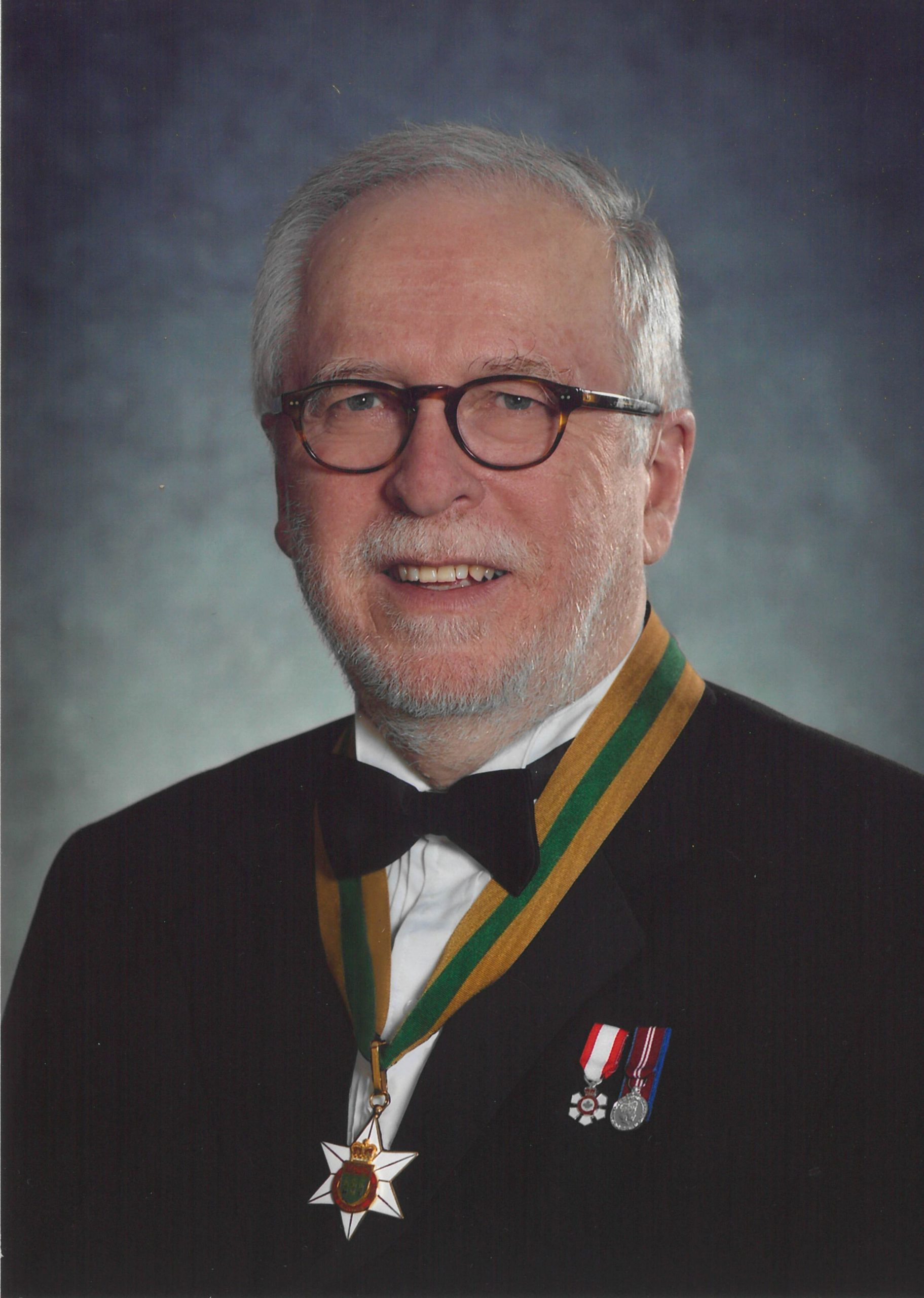 David Thaubert with Order of Canada medal. University of Regina Archives and Special Collections; David Thauberger Fonds, 2026-37, Box 3, File 21, photograph 3. Photograph by Digneyphotographics.